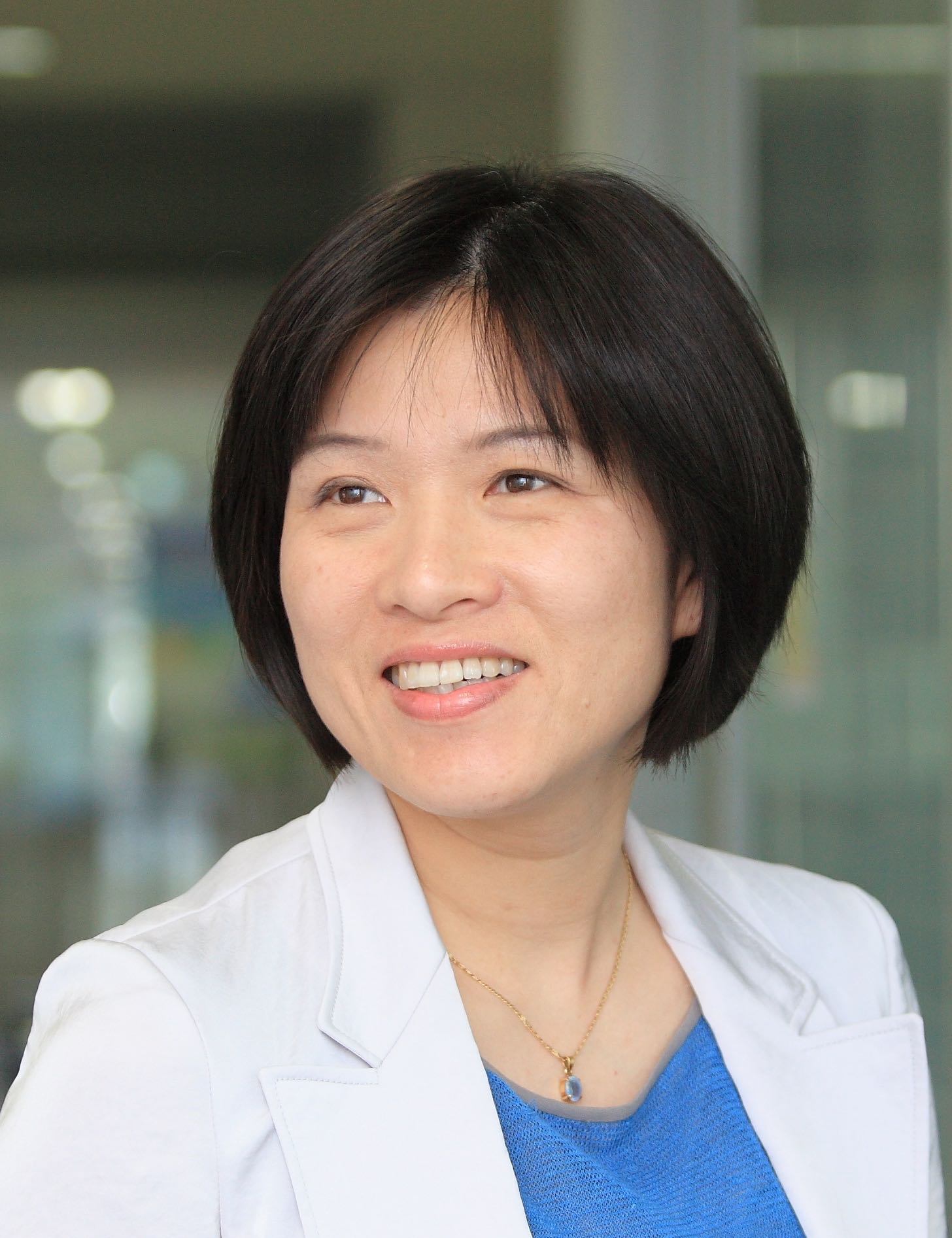
Yoon-Kyoung Cho,
Professor, Biomedical Engineering and Dean,
UNIST (Ulsan National Institute of Science & Technology)
Yoon-Kyoung Cho is currently a full professor in Biomedical Engineering and the dean of College of Information and Biotechnology at UNIST, Republic of Korea. She is a member of the National Academy of Engineering of Korea (NAEK), an associate editor of the journal ‘Lab on a chip’, a fellow of the Royal Society of Chemistry, and vice president of the Chemical and Biological Microsystems Society (CBMS). She earned her Ph.D. in Materials Science and Engineering from the University of Illinois at Urbana-Champaign in 1999, following her M.S. and B.S. in Chemical Engineering from POSTECH in 1994 and 1992, respectively. Prior to joining UNIST in 2008, she served as a senior researcher (1999–2008) at Samsung Advanced Institute of Technology (SAIT). Her current research focuses on lab-on-a-chip systems for detecting rare biomarkers, quantitative analysis of cell migration, and systems analysis of intercellular communication. Discover more at http://fruits.unist.ac.kr. https://scholar.google.com/citations?user=Jc1mz_EAAAAJ&hl=en
Engineering Liquid Biopsy: From Automated Exosome Analysis to Hand-Powered Point-of-Care Diagnostics
Saturday, 21 November 2026 at 09:50
Add to Calendar ▼2026-11-21 09:50:002026-11-21 10:50:00Europe/LondonEngineering Liquid Biopsy: From Automated Exosome Analysis to Hand-Powered Point-of-Care DiagnosticsNanomedicine and LNPs Asia 2026 in Shenzhen, ChinaShenzhen, ChinaSELECTBIOenquiries@selectbiosciences.com
Liquid biopsy is transforming precision medicine by enabling minimally invasive access to circulating biomarkers for disease detection and monitoring. Among these biomarkers, extracellular vesicles (EVs) offer exceptional promise due to their molecular richness and stability. However, widespread clinical and global deployment of liquid biopsy technologies remains limited by challenges in sensitivity, automation, cost, and accessibility.
In this talk, I will present our engineering approach based on centrifugal microfluidics to address these challenges across diverse clinical settings, spanning fully automated laboratory systems to hand-powered point-of-care diagnostics. First, I will describe our lab-on-a-disc platforms for high-performance EV analysis, which enable rapid and automated isolation of nanoscale EVs from biological fluids. Building on this foundation, I will introduce a digital EV profiling strategy that allows direct, amplification-free detection of tumor-derived EV RNAs from unprocessed plasma, substantially improving sensitivity for clinically relevant mutations and treatment monitoring. I will then expand beyond centralized laboratories to introduce hand-powered centrifugal diagnostic tools designed for extreme point-of-care environments. These platforms harness manual rotation to perform bacterial enrichment and nanoplasmonic sensing, enabling rapid, electricity-free identification of infectious pathogens with high precision. Together, these technologies illustrate how microfluidic engineering can unify advanced molecular diagnostics with scalable, low-cost solutions, accelerating the translation of liquid biopsy and precision diagnostics from the laboratory to real-world clinical and global health applications.
Add to Calendar ▼2026-11-21 00:00:002026-11-22 00:00:00Europe/LondonNanomedicine and LNPs Asia 2026Nanomedicine and LNPs Asia 2026 in Shenzhen, ChinaShenzhen, ChinaSELECTBIOenquiries@selectbiosciences.com



 Add to Calendar ▼2026-11-21 09:50:002026-11-21 10:50:00Europe/LondonEngineering Liquid Biopsy: From Automated Exosome Analysis to Hand-Powered Point-of-Care DiagnosticsNanomedicine and LNPs Asia 2026 in Shenzhen, ChinaShenzhen, ChinaSELECTBIOenquiries@selectbiosciences.com