Yoon-Kyoung Cho,
Professor, Biomedical Engineering and Dean,
UNIST (Ulsan National Institute of Science & Technology)
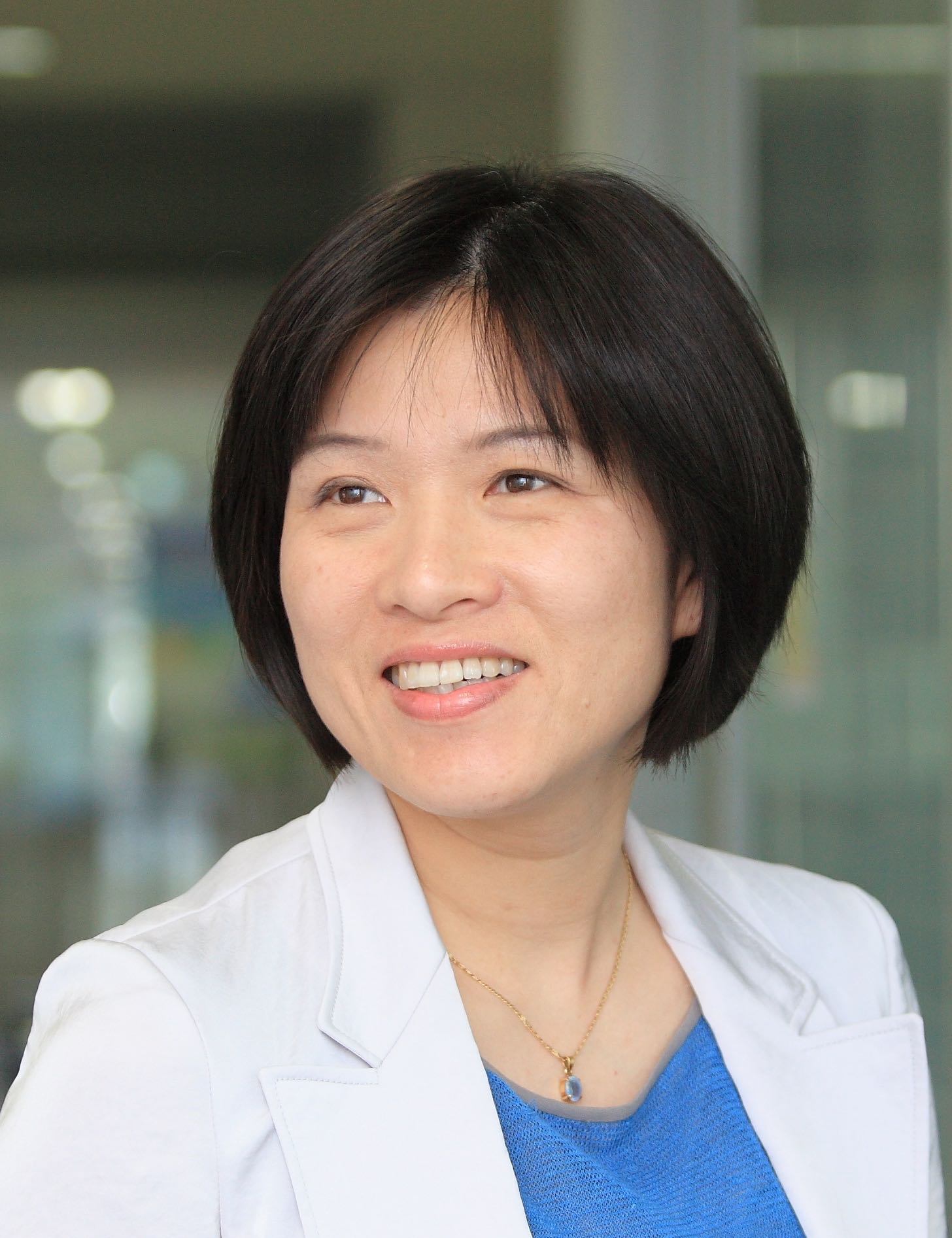
Yoon-Kyoung Cho is currently a full professor in Biomedical Engineering and the dean of College of Information and Biotechnology at UNIST, Republic of Korea. She is a member of the National Academy of Engineering of Korea (NAEK), an associate editor of the journal ‘Lab on a chip’, a fellow of the Royal Society of Chemistry, and vice president of the Chemical and Biological Microsystems Society (CBMS). She earned her Ph.D. in Materials Science and Engineering from the University of Illinois at Urbana-Champaign in 1999, following her M.S. and B.S. in Chemical Engineering from POSTECH in 1994 and 1992, respectively. Prior to joining UNIST in 2008, she served as a senior researcher (1999–2008) at Samsung Advanced Institute of Technology (SAIT). Her current research focuses on lab-on-a-chip systems for detecting rare biomarkers, quantitative analysis of cell migration, and systems analysis of intercellular communication. Discover more at http://fruits.unist.ac.kr. https://scholar.google.com/citations?user=Jc1mz_EAAAAJ&hl=en
Lab-on-a-Disc for Liquid Biopsy
Monday, 9 September 2019 at 15:00
Add to Calendar ▼2019-09-09 15:00:002019-09-09 16:00:00Europe/LondonLab-on-a-Disc for Liquid BiopsyCirculating Biomarkers, Exosomes and Liquid Biopsy Asia 2019 in Seoul, KoreaSeoul, KoreaSELECTBIOenquiries@selectbiosciences.com
The lab-on-a-disc systems to isolate and detect liquid biopsy markers such as circulating tumor cells (CTCs) and cell-free DNA(cfDNA) or Extracellular vesicles (EVs) are developed and tested with clinical samples such as whole blood or urine from cancer patients. First, we will introduce the fluid-assisted separation technology (FAST), which enables ultrafast, uniform, clog-free, and highly efficient isolation of CTCs from whole blood with pressure drop much less than in conventional filtration. In addition, we demonstrate a fully automated cfDNA enrichment device integrating the plasma separation, sample lysis, DNA binding and elution on a single device. We used the lab-on-a-disc to isolate cfDNA from patients with non-small cell lung cancer and successfully detected epidermal growth factor receptor gene mutations (L858R, T790M) during targeted drug therapy. Next, we will present a rapid, label-free, and highly sensitive method for EVs isolation and quantification using a lab-on-a-disc integrated with nanofilters (Exodisc). Urinary EVs from prostate cancer patients could be automatically enriched within 30 min using a tabletop-sized centrifugal microfluidic system followed by molecular analysis or on-chip ELISA. As a proof of concept study, we analyzed androgen receptor splice variant 7 (AR-V7) which is associated with castration-resistant prostate cancer (CRPC) and resistance to anti-androgen therapy in the RNA isolated from the urine-derived extracellular vesicles (EVs) without the need for blood withdrawal. Further, the device also facilitates temporal monitoring of tumor progression within live mouse xenograft models over a period of 13 weeks whilst using minimal volume of weekly collected blood samples. Taken together, Exodisc is a powerful tool to provide a rapid, sensitive, and point-of-care-type method for extracting intact EVs from urine or small volumes of blood samples for disease diagnosis and monitoring. We believe that this revolutionary method can contribute to accelerate the acceptance of liquid biopsy-based cancer diagnostics as a standard practice in clinical settings.
Add to Calendar ▼2019-09-09 00:00:002019-09-10 00:00:00Europe/LondonCirculating Biomarkers, Exosomes and Liquid Biopsy Asia 2019Circulating Biomarkers, Exosomes and Liquid Biopsy Asia 2019 in Seoul, KoreaSeoul, KoreaSELECTBIOenquiries@selectbiosciences.com


 Add to Calendar ▼2019-09-09 15:00:002019-09-09 16:00:00Europe/LondonLab-on-a-Disc for Liquid BiopsyCirculating Biomarkers, Exosomes and Liquid Biopsy Asia 2019 in Seoul, KoreaSeoul, KoreaSELECTBIOenquiries@selectbiosciences.com