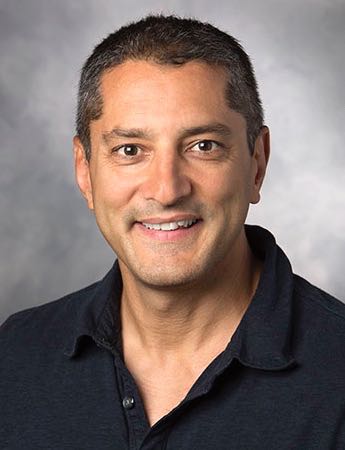
Nucleic Acid Extraction, Identification, and Quantitation Using Isotachophoresis Juan Santiago, Charles Lee Powell Foundation Professor, Stanford University
We will present novel assays where we use isotachophoresis to simultaneously extract/purify nucleic acid targets from biological samples, and then identify and quantify specific sequences using molecular beacons.
09:30
Integrated Lab-on-a-Chip Affinity and Electrophoresis Systems for Rapid Biomarker Quantitation Adam Woolley, Associate Professor, Brigham Young University
Integration in microfluidic systems enables new and improved analysis capabilities. The combination of affinity extraction with rapid electrophoretic analysis and other processes will be presented as a novel approach for rapid quantification of biomarkers in complex mixtures.
10:00
Analyte Concentration by Flow-Step Focusing Peter Howell, Research Chemist, Naval Research Laboratory
Carefully controlled removal of fluid at a T intersection is used to separate and concentrate analytes from a low background concentration. Concentration factors in the 100's are possible, and the concentrated band can be periodically and selectively released to downstream analysis.
10:30
Coffee Break and Networking in Exhibition Hall
Session: Developments in Materials and Microfabrication
11:15
Shrink-Film Fabrication for Lab on a Chip Applications Michelle Khine, Associate Professor, University Of California Irvine
11:45
Microfluidic Materials, Market and Trends Frederic Breussin, Business Unit Manager, Yole Developpement
This paper provides data on the market of the main materials used for microfluidic applications and compares the different manufacturing processes.
12:15
Lunch and Networking in Exhibition Hall
12:45
Free Workshop Single Sample, Single Slice, Single Prep, Single Well… Multiple Answers
13:30
Poster Viewing Session
Session: Standardisation of Components
15:15
Software Programmable Lab-on-a-Chip Applications and Optimization Steve Wereley, Professor, Purdue University
Our work concentrates on developing general purpose Lab-on-Chip devices that can perform a wide variety of assays simply by changing reagents and programming. We have also been bringing new multiphysics approaches to cell manipulation.
15:15
Coffee and Networking in Exhibition Hall
Session: Lab-on-a-Chip Applications
16:00
Integrated Microfluidic Devices – Case Studies from Automated Patch Clamp to Portable CD4 Cell Counting Norbert Gottschlich, Key Account Manager, THINXXS MICROTECHNOLOGY AG
Examples of innovative approaches for realizing unit functions on chip will be shown. Examples of truly integrated microfluidic devices for point-of-care diagnostics and analytical applications will be presented.
16:30
Lab-on-a-Chip for Cell Sorting and PET Tracer Processing Nicole Pamme, Professor in Analytical Chemistry, Stockholm University
Lab-on-a-chip technology can act as a tool for medical applications. Two examples are presented here, namely (i) the sorting of magnetically labelled cells and (ii) the on-chip processing of radiopharmaceuticals employed in positron emission tomography (PET).
17:00
Visualizing the Genome using Micro-/ Nano-Fluidic Chips Kalim Mir, Visiting Scholar, University of Oxford
I will describe novel hybrid micro/nanofluidic devices for extraction and stretching of genomic DNA and obtaining sequence-based information in its native long-range linear context.
17:30
Opportunities and Pitfalls in Microfluidics Enabled Product Development Holger Becker, Chief Scientific Officer, Microfluidic ChipShop GmbH
As Lab-on-a-Chip technologies make their way into an ever increasing number of commercial products, it becomes noticeable that for complex integrated microfluidic devices certain protocols and development strategies have to be employed for a successful product development. We will present strategic and practical approaches with examples for such developments.
18:00
Drinks Reception
Friday, 30 September 2011
Session: Point-of-Care Diagnostics
09:00
Keynote Presentation
Building the Biomarker Highway: Advanced Diagnostics Based on Programmable Bio-Nano-Chip Sensors John McDevitt, Professor, Rice University
Programmable bio-nano-chip sensors are now in development with goal to make healthcare more affordable and accessible globally.
09:30
Next Generation Biosensing – Integrated Microfluidic for Point of Need Diagnostics Frank Bier, Director, Fraunhofer Institute for Biomedical Engineering
To facilitate accurate measurements of molecular parameters for diagnostic puposes at the point of need various technologies have to be connected. This achieved bay the construction of autonomous biosensors.
10:00
Bionanoscience-based ICs for Innovative Global Healthcare Research & Technology (BIGHEART) Luke Lee, Director, Global Health Research and Technology (BIGHEART), NUS
I will discuss cellular BASICs (Biologic Application Specific Integrated Circuits) for quantitative biology and preventive personalized medicine: Self-powered Integrated Microfluidic Blood Analysis System (SIMBAS) and Optofluidic Application Specific Integrated System (OASIS).
10:30
Coffee and Networking in Exhibition Hall
11:15
Microdevices for Diagnosis of HIV and Sexually Transmitted Infections in Resource-Limited Settings Curtis Chin, Lead Post Doctoral Fellow, Columbia University
We present the development and evaluation of an integrated, low-cost, microfluidics-based assay for point-of-care diagnosis of HIV and sexually transmitted infections.
11:45
Human Tear Fluid-Based Point-of-Care Diagnostics Enabled by Integrated Microfluidic Systems Kelly Karns, , University of California Berkeley
We will detail a multiplexed microfluidic assay for validated autoimmune dysfunction biomarkers in human tear film fluids from healthy and Sjögren’s syndrome (SS) patients. This work is the first specific and rapid (< 3 min) microfluidic assay for biomarkers of dry eye disease in sparingly available ocular fluid.
12:15
Lunch and Networking in Exhibition Hall
13:30
Poster Viewing Session
14:15
Session: New Applications
14:15
Keynote Presentation
Artery on a Chip – Organ-Based Approach for Probing Intact Blood Vessels Axel Guenther, Professor and Co-Lead, Collaborative Centre for Research and Applications in Fluidic Technologies (CRAFT), University of Toronto
The structure and function of small blood vessels is closely linked to key questions in cardiovascular health and disease. We present the first scalable platform that subjects intact resistance arteries to near-physiological conditions in vitro while systematically probing its biological function.
14:45
Selective Culture and Analysis of Unattached Cancer Stem Cell Spheroids in a Microsystem Ian White, Assistant Professor, University of Maryland
Tumor cells with stem-like properties have been linked with relapse and metastasis. These so-called cancer stem cells uniquely form spherical colonies (called mammospheres for breast cancer) in low-attachment serum-free culture. We will present a microsystem that provides a low-attachment surface and a low-convection environment to enable mammospheres culture.
15:15
Coffee and Networking in Exhibition Hall
Session: Single Cell Analysis
15:45
Microfluidic Tools for Studying Cells with Single Cell Resolution Anup Singh, Post Doctoral Scientist, Sandia National Laboratories
I will discuss development of innovative microfluidic platforms for studying the metagenome, genome and proteome of cells with single cell resolution.
16:15
Quantitative Analysis of Gene Expression at the Single-Cell Level with Microdroplet-Based Microfluidic Technology Patrick Tabeling, Professor, ESPCI Paris Tech
The quantitative analysis of gene expression at the single-cell level is performed with microdroplet-based microfluidic technology. We measure the messenger RNA from total RNA and cells, in configurations suitable for achieving high throughput conditions.