

| Conferences > Bioprinting and Bioink Innovations for 3D-Tissues 2022 > Keynote Speakers |
| Register | Login |
Adam FeinbergCTO and Co-founder, FluidForm Inc., Professor of Biomedical Engineering, Carnegie Mellon University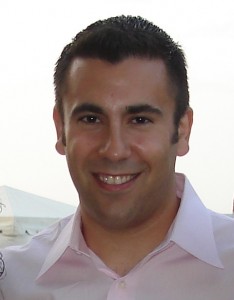 Dr. Adam Feinberg is Co-Founder and CTO of FluidForm Inc, a start-up company commercializing FRESH 3D bioprinting technology, and a Professor at Carnegie Mellon University in the departments of Biomedical Engineering and Materials Science & Engineering. He earned his BS in Materials Science & Engineering from Cornell University in 1999 with Co-op experience at Abiomed, Inc., working on total artificial hearts. He then earned his PhD in Biomedical Engineering from the University of Florida, focused on engineering cell-material interactions to prevent and enhance adhesion. This was followed by postdoctoral training at Harvard University, developing new biomaterials and stem cell-based cardiac tissue engineering strategies. Dr. Feinberg has co-authored over 50 peer-reviewed publications, holds over 20 US patents and patent applications and has received multiple honors including the NSF CAREER Award, the NIH Director’s New Innovator Award, and Fellow of the American Institute for Medical and Biological Engineering. A primary research focus is engineering extracellular matrix (ECM) protein scaffolds using advanced biomanufacturing and 3D bioprinting approaches for multiple applications including cancer models, regenerative scaffolds, skeletal muscle and cardiac muscle tissue engineering. At FluidForm, he is driving the commercialization of the FRESH 3D bioprinting platform for a wide range of applications in the biopharma, medical device, and regenerative medicine industries. |
Michael GelinskyProfessor and Head, Center for Translational Bone, Joint and Soft Tissue Research, Faculty of Medicine, Technische Universität Dresden Michael Gelinsky received his PhD in Chemistry from Freiburg University (Germany). In 1999 he moved to TU Dresden and worked for around 10 years at the department of Materials Science, heading his own group at the newly founded Max Bergmann Center of Biomaterials from 2002. In 2010 he was appointed Full Professor at the Faculty of Medicine and head of the Centre for Translational Bone, Joint and Soft Tissue Research (tu-dresden.de/med/tfo). His work is focused on biomaterials and scaffold development, tissue engineering and regenerative therapies, mostly for musculoskeletal tissues. His group is also very active in the field of additive manufacturing of implants and biofabrication technologies. Michael Gelinsky is currently President of the German Society for Biomaterials, is a member of the Board of Directors of the International Society for Biofabrication (ISBF) and has been appointed as coordinator of an ESA Topical Team on “3D Bioprinting of living tissue for utilization in space exploration and extraterrestrial human settlements”. He also is member of the ESA Facility Science Team (FST) for the development of a bioprinter and 3D cell culture system for the ISS. |
Sarah HeilshornProfessor, Stanford University Sarah Heilshorn is Professor and Associate Chair in the Materials Science & Engineering Department at Stanford University. Her laboratory integrates concepts from materials science and protein engineering to design bioinspired materials for regenerative medicine, organoid culture, and bioprinting. She is a fervent supporter of diversifying the research community. She is a Fellow of the American Institute for Medical and Biological Engineering and the Royal Society of Chemistry. She serves as Associate Editor of the journal Science Advances, Special Content Editor of Acta Biomaterialia, and on the Board of Directors for the International Society for Biofabrication. |
Lorenzo MoroniProfessor, Biofabrication for Regenerative Medicine, Maastricht University and Founder MERLN Institute for Technology-Inspired Regenerative Medicine Prof. Dr. Lorenzo Moroni studied Biomedical Engineering at Polytechnic University of Milan, Italy, and Nanoscale Sciences at Chalmers Technical University, Sweden. He received his Ph.D. cum laude in 2006 at University of Twente on 3D scaffolds for osteochondral regeneration, for which he was awarded the European doctorate award in Biomaterials and Tissue Engineering from the European Society of Biomaterials (ESB). In 2007, he worked at Johns Hopkins University as a post-doctoral fellow in the Elisseeff lab, focusing on hydrogels and stem cells. In 2008, he was appointed the R&D director of the Musculoskeletal Tissue Bank of Rizzoli Orthopedic Institute, where he investigated the use of stem cells from alternative sources for cell banking, and the development of novel bioactive scaffolds for skeletal regeneration. From 2009 till 2014, he joined again University of Twente, where he got tenured in the Tissue Regeneration department. Since 2014 he works at Maastricht University, where he is a founding member of the MERLN Institute for Technology-Inspired Regenerative Medicine. In 2016, he became full professor in biofabrication for regenerative medicine. His research group interests aim at developing biofabrication technologies to generate libraries of 3D scaffolds able to control cell fate, with applications spanning from skeletal to vascular, neural, and organ regeneration. In 2014, he received the prestigious Jean Leray award for outstanding young principal investigators from the ESB and the ERC starting grant. In 2016, he also received the prestigious Young Scientist Award for outstanding principal investigators from TERMIS. In 2017, he was elected as faculty of the Young Academy of Europe and in the top 100 Italian scientists within 40 worldwide by the European Institute of Italian Culture. Since 2019, he is chair of the Complex Tissue Regeneration department and vice-director of MERLN. From his research efforts, 3 products have already reached the market. |
Lijie Grace ZhangProfessor and Associate Dean for Research, The George Washington University Dr. Lijie Grace Zhang is a Professor and Associate Dean for Research in the School of Engineering and Applied Science at the George Washington University. She obtained her Ph.D. in Biomedical Engineering at Brown University. Dr. Zhang joined GW after finishing her postdoctoral training at Rice University and Harvard Medical School. She is the director of the Bioengineering Laboratory for Nanomedicine and Tissue Engineering at GW. She has received the ASME Sia Nemat-Nasser Early Career Award, NIH Director’s New Innovator Award, Society of Engineering Science Young Investigator Medal, Young Innovator in Cellular and Molecular Bioengineering, and John Haddad Young Investigator Award by American Society for Bone and Mineral Research, etc. Her lab is focused on applying advanced 3D/4D bioprinting, nanotechnology, and stem cells for complex tissue regeneration and various disease treatments. Dr. Zhang has authored 147 publications including 108 peer-reviewed journal papers in top journals in her field such as Science Advances, Biomaterials, Advanced Science, Materials today, Nano today, Biofabrication, ACS Applied Materials & Interfaces, Advanced Healthcare Materials, Small Methods, Acta Biomaterialia, Nano Research, and Tissue Engineering, 22 conference proceedings and 17 book chapters. Her lab has given over 345 presentations in various international/national conferences and universities. Dr. Zhang also serves as the Editor-in-Chief of Biomedical Engineering Advances; Editor of Materials Science and Engineering C: Materials for Biological Applications; Associate Editor of Journal of Nanobiotechnology; Associate Editor-in-Chief of International Journal of Nanomedicine; and Associate Editor of ASME Journal of Engineering and Science in Medical Diagnostics and Therapy. |


