

Konstantinos AprilakisBiotechnology Equity Research, JMP Securities, LLC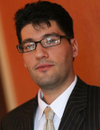 Konstantinos N. Aprilakis, MD is the senior associate on Mike King’s biotechnology equity research team at JMP Securities, LLC. Dr. Aprilakis earned his BA in Philosophy from Stony Brook University and MD from Weill Cornell Medical College. He conducted protein folding research in the lab of Dr. Daniel P. Raleigh at Stony Brook, as well as stem cell research in the lab of Dr. Shahin Rafii at Weill Cornell. Dr. Aprilakis is the recipient of the Rogosin Institute’s Dr. Albert L. Rubin award, the Howard Hughes Medical Institute Academic Year Fellowship and the George N. Papanicolaou, M.D. Scholarship. |
Ellen BeasleySenior Vice President, Genomic Health Inc Ellen Beasley has over 20 years of product development and program management experience in biotechnology and genomics sciences. She brings a record of successful integration and application of bioinformatics, genetics and genomics platforms to advance and accelerate life sciences instrument, diagnostics and therapeutics product discovery and development. Ellen started her career in human genomics at the Stanford Human Genome Center and lead the team developing physical maps of the human genome. She then moved to Celera Genomics and participated in the genome sequencing and gene discovery efforts for the human genome. After the completion of the human genome, Ellen managed various discovery efforts to apply the human genome, including drug target discovery efforts, investigation of the genetic basis of autoimmune disease and companion diagnostic partnership development. Ellen then moved to Perlegen Sciences where she was SVP of R&D Operations, managing companion diagnostic programs and building the CLIA lab for commercialization of a breast cancer risk assay. In 2009, Ellen joined Life Technologies and was VP of Biological Information Systems, leading a team to develop methods and software tools to exploit the data from next generation sequencers. Since joining Genomic Health in 2013, Ellen has focused on the application of next generation technologies, including sequencing and liquid-based biopsy, to discover and develop Genomic Health’s next generation of products to serve patients living with cancer. Ellen received a B.S. in Biology from Trinity College (Hartford, CT) and a Ph.D. in Molecular Genetics & Cell Biology from The University of Chicago, she completed post-doctoral training at the Biozentrum of the University of Basel in Switzerland and Stanford University. Ellen is an inventor on approximately 170 patents. |
Christine BironEsther Elizabeth Brintzenhoff Professor of Medical Science, Professor of Molecular Microbiology and Immunology, Brown University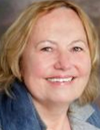 Christine A. Biron, Brintzenhoff Professor and former Chairperson in the Department of Molecular Microbiology and Immunology, focuses her research on innate immunity to viruses, particularly at the level of natural killer cells, cytokines, and signal transducers and activators of transcription. She trained at UMASS, UNC, and Scripps Research Foundation, and was a Visiting Scientist at the Karolinska Institute as well as a Visiting Professor at Trinity College Dublin. A past Scholar of the Leukemia Society of American, she has served as Associate Editor for the Journal of Immunology, on the Editorial Board for Virology, as the Specialty Chief Editor for Frontiers Microbial Immunity, on NIH Study Sections, on the Board of Scientific Counselors of the NCI, on the US-Japan Immunology Board for NIAID, and on the Board of Scientific Counselors of the NIAID. She is currently a Journal of Experimental Medicine Advisory Editor, on the Board of Editors for mBio, on the Editorial Board for Current Opinion in Virology, and on the External Scientific Advisory Board for the Trudeau Institute. Professor Biron was recently a Distinguished Lecturer at the American Association of Immunology Meeting. She is a member of the American Association of Immunologists and American Society for Virology, and an elected Fellow of both the American Association for the Advancement of Science and the American Academy of Microbiology. |
E Antonio ChioccaProfessor and Chairman, Department of Neurosurgery, Brigham and Women's Hospital/Harvard Medical School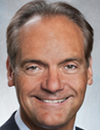 Dr. Chiocca is the Harvey Cushing Professor of Neurosurgery at Harvard Medical School and is the Chairman Neurosurgery at the Brigham and Women’s Hospital. He was previously Chairman of the Department of Neurosurgery at the Ohio State University Medical Center. He has been continuously funded by the NIH since 1996. He has more than 300 peer-reviewed publications, some in journals such as Nature Medicine, Nature Biotechnology, Molecular Cell, and PNAS. He has elucidated how viruses with specific gene mutations will replicate selectively in tumors with a specific defect in a tumor suppressor pathway. He has also shown how modulation of innate immunity will improve replication of these tumor-selective viruses. More recently, he has elucidated how specific microRNAs (miR-128 and miR-451) regulate cellular target transcripts to permit tumor cell self-renewal and invasion into brain. He has been PI of three multi-institutional clinical trials of gene-, viral-therapies for malignant gliomas, has been permanent member of NIH study sections (NCI DT and NCI P01-D clinical studies), has been a member of the federal recombinant DNA Advisory Committee (RAC/OBA) and is currently a member of the NINDS Scientific Advisory Council. In 2013, he was elected Vice-President of the Society for Neuro-Oncology (SNO). In 2015, he was elected President of SNO. He is currently Treasurer of the American Academy of Neurological Surgery and is Chair of the Research Committee for the Society of Neurological Surgery. He also serves on the scientific advisory board of several foundations (Sontag, American Brain Tumor Association). He received The Grass Award in 2007, the Farber Award in 2008 and the Bittner Award in 2013. He was elected to the American Society for Clinical Investigation (2005), is an AAAS fellow (2005) and was also elected to the National Academy of Medicine (formerly Institute of Medicine) in 2014. He also has served on multiple editorial boards and is the current Tumor Section Editor for Neurosurgery. He was on the editorial board of Journal of Neurosurgery from 2005 until 2012. |
David FabrizioLeader, Cancer Immunotherapy, Foundation Medicine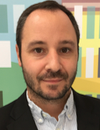 Leader, Cancer Immunotherapy |
Gordon FreemanProfessor of Medicine, Dana-Farber Cancer Institute, Harvard Medical School Gordon J. Freeman, PhD works in the Department of Medical Oncology at Dana-Farber Cancer Institute and is Professor of Medicine at Harvard Medical School. Dr. Freeman earned his BA in Biochemistry and Molecular Biology, and PhD in Microbiology and Molecular Genetics from Harvard University. His research has identified the major pathways that control the immune response by inhibiting T cell activation (PD-1/PD-L1 and B7-2/CTLA-4) or stimulating T cell activation (B7-2/CD28). In 2000, Dr. Freeman discovered PD-L1 and PD-L2, and showed they were ligands for PD-1, thus defining the PD-1 pathway and the drug target: block the interaction. He showed the function of PD-1 was to inhibit immune responses and that blockade enhanced immune responses. He showed that PD-L1 is highly expressed on many solid tumors such as breast and lung, as well as some hematologic malignancies and allows these tumors to inhibit immune attack. He received the 2014 William B. Coley Award for Distinguished Research in Tumor Immunology for this work that led to development of PD-1 pathway blockade for cancer immunotherapy. |
Tony GodfreyAssociate Chair – Research, Department of Surgery, Boston University Medical Center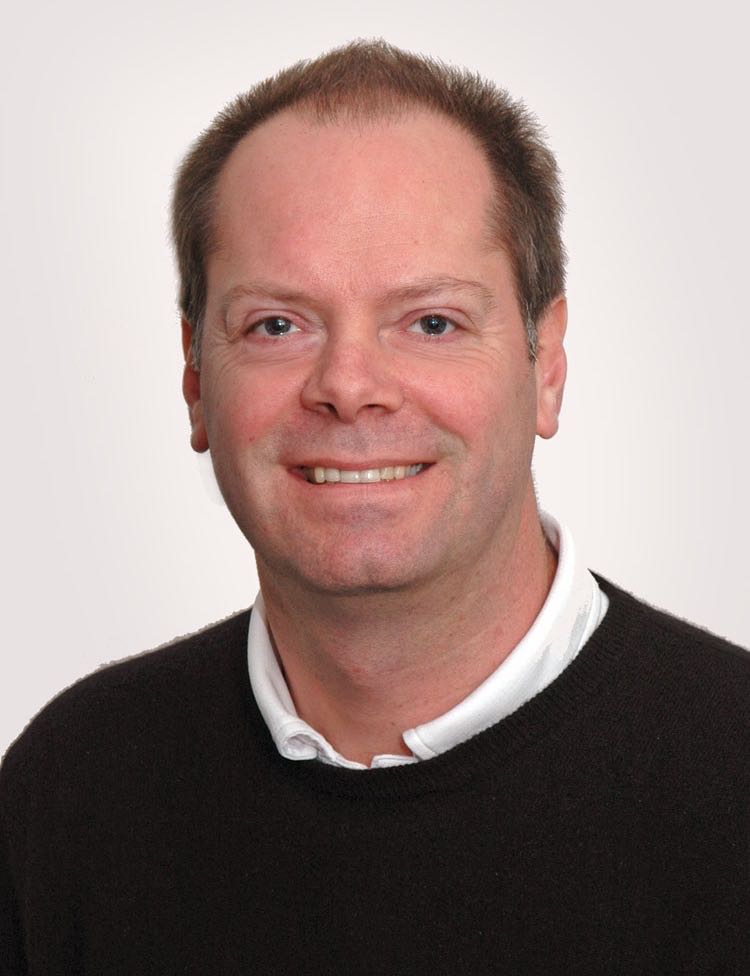 Tony E. Godfrey, PhD, Associate Chair for Surgical Research and Associate Professor of Surgery, Boston University School of Medicine, earned a bachelor’s of science degree in biochemistry from Brunel University in England, followed by a doctorate in molecular biology and biochemistry, also from Brunel. He attended the University of California, San Francisco, for postdoctoral fellowships followed by faculty appointments at the University of Pittsburgh, Mount Sinai Hospital, NY, and the University of Rochester Medical Center in Rochester, NY. Dr. Godfrey’s research is focused on cancer genetics and molecular pathology. Research projects use state-of-the-art genetic and genomic approaches to address clinical needs in the areas of cancer diagnosis, prognosis and therapy. Currently the major focus of Dr. Godfrey’s research is on Barrett’s esophagus and esophageal adenocarcinoma. The Godfrey lab works closely with translational research teams comprised of surgeons, pathologists and oncologists in order to develop new molecular approaches to cancer detection, staging and treatment. |
David HaflerWilliam S. and Lois Stiles Edgerly Professor of Neurology and Professor of Immunobiology, Yale University Dr. Hafler is the William S. and Lois Stiles Edgerly Professor and Chairman Department of Neurology and Professor or Immunobiology, Yale School of Medicine, and is the Neurologist-in-Chief of the Yale-New Haven Hospital. He graduated magna cum laude in 1974 from Emory University with combined B.S. and M.Sc. degrees in biochemistry, and the University of Miami School of Medicine in 1978. He then completed his internship in internal medicine at Johns Hopkins followed by a neurology residency at Cornell Medical Center-New York Hospital in New York. Dr. Hafler was trained in immunology at the Rockefeller University and then at Harvard where he joined the faculty in 1984 and later became the Breakstone Professorship of Neurology at Harvard and was a founding Associated Member of the Broad Institute at MIT. In 2009 he move to Yale as the Chair of the Department of Neurology. Dr. Hafler is a clinical scientist with a research interest in the mechanism of multiple sclerosis with over 370 publications in the field of MS, autoimmunity and immunology. He is a co-founder of the International MS Genetic Consortium a group that identified the genes causing MS. Dr. Hafler has been elected to membership in the American Society of Clinical Investigation, the Alpha Omega Society, and was a Weaver Scholar of the NMSS. He is a member of the editorial boards for Journal of Clinical Investigation and the Journal of Experimental Medicine, and is co-founder of the Federation of Clinical Immunology Societies and leads the NIH Autoimmunity Prevention Center Grant at Yale. Hafler was a Jacob Javits Merit Award Recipient from the NIH and has won many awards including 2010 Dystel Prize for MS research from the American Academy of Neurology. |
Malini HarigopalAssociate Professor, Dept of Pathology, Breast and Cytopathology, Yale University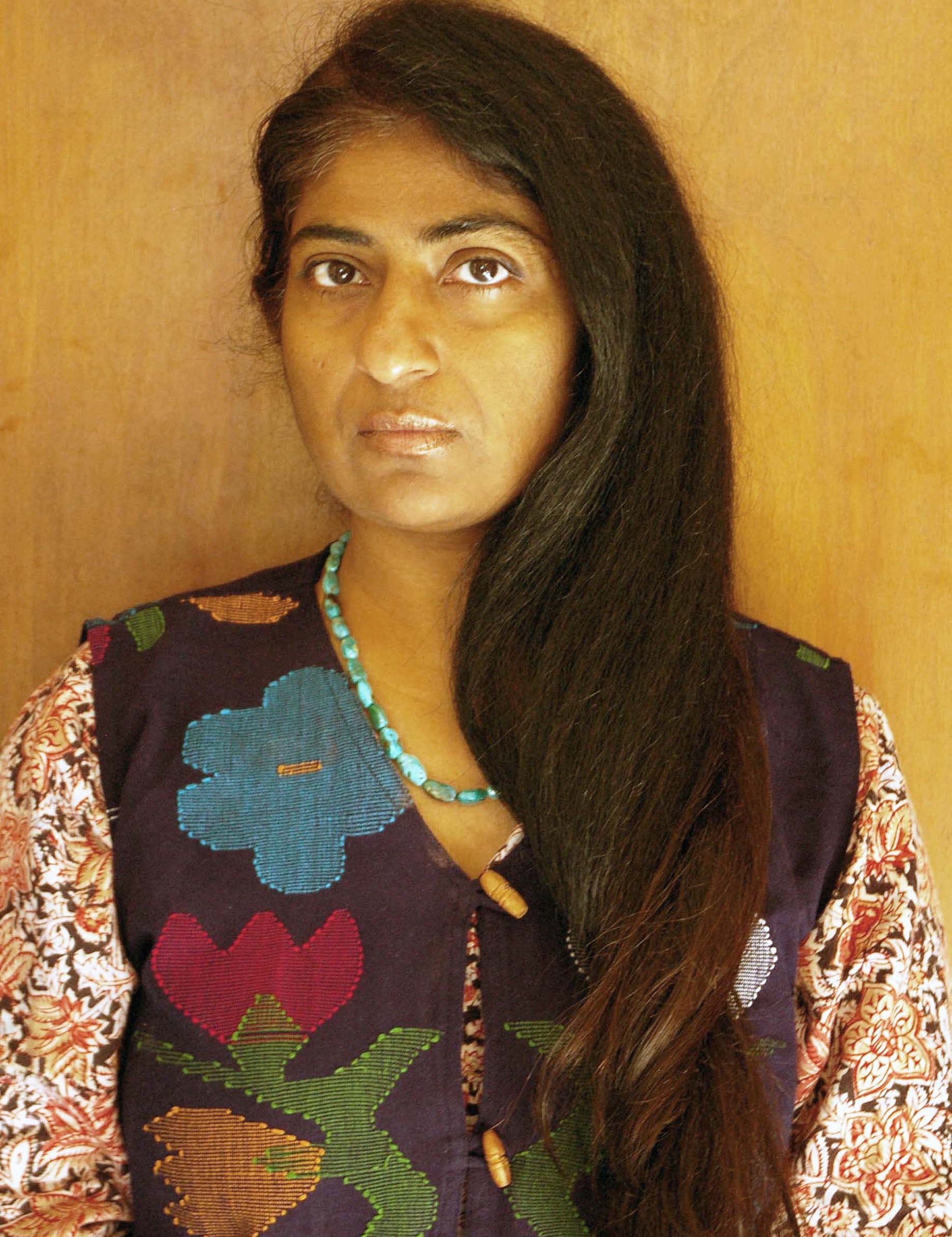 Dr. Harigopal Associate Professor at Yale University Department of Pathology since 2007 and the Interim Director of the Breast Pathology Department. Yale has a wide spectrum of specimens with gynecologic cytology and surgical pathology, totaling over 80,000 cases annually. |
Shana KelleyProfessor, University of Toronto Dr. Shana Kelley is a Distinguished Professor of Chemistry, Biochemistry, Pharmaceutical Sciences, and Biomedical Engineering at the University of Toronto. Dr. Kelley received her Ph.D. from the California Institute of Technology and was a NIH postdoctoral fellow at the Scripps Research Institute. The Kelley research group works in a variety of areas spanning bioanalytical chemistry, chemical biology and nanotechnology. Shana’s group has developed novel electrochemical sensors that enable ultrasensitive nucleic acids detection for clinical diagnostics, and has also investigated a new set of chemical probes that interact with intracellular nucleic acids. The Kelley labs also use nucleic acids as building blocks for complex nanomaterials assembly. Dr. Kelley’s work has been recognized with a variety of distinctions, including being named one of “Canada’s Top 40 under 40”, a NSERC E.W.R. Steacie Fellow, and the 2011 Steacie Prize. She has also been recognized with the Pittsburgh Conference Achievement Award, an Alfred P. Sloan Research Fellowship, a Camille Dreyfus Teacher-Scholar award, a NSF CAREER Award, a Dreyfus New Faculty Award, and was also named a “Top 100 Innovator” by MIT’s Technology Review. She is a founder of two molecular diagnostics companies, GeneOhm Sciences (acquired by Becton Dickinson in 2005) and Xagenic Inc. |
Fred KramerProfessor of Microbiology, Biochemistry & Molecular Genetics, New Jersey Medical School Rutgers University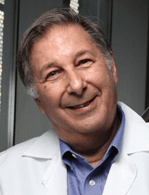 Fred Russell Kramer is Professor of Microbiology, Biochemistry, and Molecular Genetics at Rutgers University. After receiving a doctorate from the Rockefeller University, he was a member of the faculty of Columbia University for 17 years, and then moved his laboratory to the Public Health Research Institute, where he has carried out research with his colleagues for the past 28 years. |
Cloud PaweletzHead of the Translational Research Laboratory, Dana Farber Cancer Institute Dr. Paweletz is head of the Translational Research Laboratory (TRL) of the Belfer Institute for Applied Cancer Science at the Dana Faber Cancer institute. He joins the Belfer Institute from Merck & Co., Inc., where he held positions of increasing responsibility for more than 10 years, most recently serving as externalization lead and proteomics site lead for the Department of Molecular Biomarkers. At Merck, Dr. Paweletz successfully built platforms to look at disease biomarkers in body fluids and oversaw research activities spanning the spectrum from early-stage discovery to the clinic. Prior to that, he was a post-doctoral fellow in the department of physiology at the Uniformed Services University School of Medicine in Bethesda, and a research fellow in the laboratory of pathology at the National Cancer Institute, National Institutes of Health (NIH) in Bethesda. |
Johan SkogChief Scientific Officer, Exosome Diagnostics Inc Dr. Skog currently serves as chief scientific officer of Exosome Diagnostics where he is leading the research and development efforts for biofluid diagnostics using exosomes in diseases such as cancer, metabolic and neurodegenerative diseases. He is the primary inventor of Exosome Diagnostics' core technology and, in particular, blood-based genetic diagnostics of cancer. Dr. Skog made the discovery that tumor-shed exosomes (microvesicles) contain genetic information of the tumor. He showed that these microvesicles serve to deliver messages to other cells inducing changes favorable to the proliferation of cancer cells. He demonstrated that these tumor exosomes are released into the bloodstream and that they can be isolated and studied for genetic mutations (Skog et al. Nature Cell Biology 2008; 10: 1470-1476). Prior to the start of the company Exosome Diagnostics, Dr. Skog was working at Massachusetts General Hospital/Harvard Medical School where he was studying the role of tumor stem cells in gliomas and later tumor derived exosomes, including their content of RNA biomarkers and transposable elements such as endogenous retroviruses. He also showed that gene therapy vectors can be incorporated into microvesicles and be used as a “stealth” vector with changed tropisms (Maguire et al. Molecular Therapy 2012 Feb 7). Dr. Skog received his PhD at the Department of Virology, Umea University, Sweden, working on novel gene therapy vectors for treatment of gliomas. |
Paul SongChief Medical Officer, Cynvenio Biosystems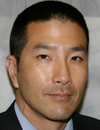 Dr. Song oversees Cynvenio’s translational and clinical research programs. Dr. Song was formerly a member of the faculty at Cedars Sinai Medical Center, in the Samuel Oschin Cancer Center department of radiation oncology and biomedical sciences. In addition, he serves as Chief Medical Officer at AT-Gen Co. Ltd, where he oversees all clinical aspects of the company’s NK Vue, an ELISA-based blood test which measures natural killer cell activity. Dr. Song graduated with honors from the University of Chicago and received his M.D. degree from George Washington University. Dr. Song completed his residency in radiation oncology at the University of Chicago and completed a brachytherapy fellowship at the Institut Gustave Roussy. He also was awarded an ASTRO research fellowship by the American Society of Radiation Oncology for his work in genetic radiotherapy. |
Gary S SteinProfessor and Chairperson, Department of Biochemistry, Director, University of Vermont Cancer Center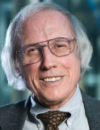 Trained in biology and pathology, Gary Stein has a longstanding dedication to translating mechanistic understanding of cancer biology into clinically relevant investigation with the potential for advancing cancer prevention, early detection and therapy. Trans-disciplinary team research has always been a key approach for Gary Stein – it has been the guiding strategy for his own research group and he actively advocates collaboration in his role as Chair of the University of Vermont Department of Biochemistry and Director of the University of Vermont Cancer Center. |
AmirAli TalasazCo-Founder, President & COO, Guardant Health Dr. Amirali Talasaz, Ph.D. serves as the President and Chief Operating Officer of Guardant Health Inc. Mr. Talasaz is a serial entrepreneur in the sample preparation and clinical research fields. Prior to co-founding Guardant, he served as Senior Director of Diagnostics Research at Illumina and led the research efforts for emerging clinical applications of next-generation genomic analysis. During that time, he developed different sample preparation technologies suitable for clinical applications. Before Illumina, he founded Auriphex Biosciences, which focused on genetic analysis of circulating tumor cells for cancer management. Prior to his industrial career, he led the Technology Development group at Stanford Genome Technology Center. Mr. Talasaz received his PhD in Electrical Engineering and MSc in Management Science from Stanford University. |
Abraham TzouMedical Officer, Food and Drug Administration (FDA/CDRH) Abraham Tzou received his medical degree from Northwestern and trained in clinical pathology at Yale. He is a Medical Officer in the Division of Molecular Genetics and Pathology, Office of In Vitro Diagnostics and Radiological Health, Center for Devices and Radiological Health. His work includes evaluation of in vitro diagnostic devices for cancer screening, companion diagnostics, cancer prognosis, genetic disorders, and other emerging diagnostics. |


