

Dong Pyo KimChangjiang Scholar, Intelligent Microfluidics for Advanced Theranostics Lab, Harbin Institute of Technology, China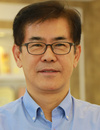 Prof. Kim is a Yangtze River chair professor of HIT-Shenzhen, leading to innovative microfluidics for advanced theranostics from 2025, by shifting from POSTECH in Korea. He obtained a Ph.D. in chemistry and a postdoctoral degree in materials engineering, and worked at a national lab and a university for over 30 years in total, since 1993. His career in microfluidic-based continuous-flow synthetic processes encompasses the manufacturing of APIs and bespoke drug delivery systems, as well as the recent development of AI-based autonomous and integrated processes for biopharmaceuticals. He has published 350 peer-reviewed papers and 50 patents. He received the Academic Excellence Award (2017, Korean Chemical Society), Severo Ochoa Visiting Fellowship (2017, Spain), the POSTECHIAN of the Year (2016, POSTECH), The Scientist of the Month (2016, NRF), Yonsan chaired professor (POSTECH,2017), Henry McGee Lecturer (Virginia State Univ, 2021). |
Shu KobayashiProfessor, The University of Tokyo Shu Kobayashi studied at The University of Tokyo, receiving his Ph.D. in 1988 working under the direction of Professor T. Mukaiyama. Following an initial period as assistant professor, he was promoted to lecturer then associate professor at Science University of Tokyo (SUT). In 1998, he moved to the Graduate School of Pharmaceutical Sciences, The University of Tokyo, as full professor. In 2007, he was appointed to his current position as professor of organic chemistry in the Department of Chemistry, Faculty of Science, The University of Tokyo. Professor Kobayashi held various visiting professorships, including the Universite Louis Pasteur, Strasbourg (1993), Kyoto University (1995), Nijmegen University (1996), Philipps-University of Marburg (1997), Paris Sud (2010), and ESPCI (2016). Professor Kobayashi has wide-ranging research interests that include the development of new synthetic methods and novel catalysts, organic reactions in water, solid-phase and flow synthesis, total synthesis of biologically interesting compounds, and organometallic chemistry. He has held numerous named lectureships and is a recipient of many prestigious awards, including the Chemical Society of Japan Award for Young Chemists (1991), Springer Award in Organometallic Chemistry (1997), IBM Science Award (2001), Organic Reactions Lecturer (2002), Nagoya Silver Medal (2002), Mitsui Chemical Catalysis Science Award (2005), JSPS Prize (2005), the Arthur C. Cope Scholar Award from the American Chemical Society (2006), Howard Memorial Lecturer (2006), C.S. Hamilton Award (2006), Merck-Cambridge Lecturer (2007), Boehringer Ingelheim Lecturer (2009), Humboldt Research Award (2013), Green Chemistry Minister of Education Award (2013), Green Chemistry Minister of Education Award (2013), Honorary Professor, Wuhan Institute of Technology (2013), TUM-IAS Honorary Hans Fischer Senior Fellow (2013), Honorary Professor, Wuhan University of Technology (2014), Association for the Advancement of Science(AAAS) Fellow (2015), Toray Science and Technology Prize (2016), Honorary Professor, Hebei Engineering University (2016), Negishi Award (2018), Chemical Society of Japan Award (2019), The T.-Y. Luh Lectureship Award (2019). |
John NaberDirector, Flow Chemistry and Lab Automation, Process Research & Development, Merck & Co John leads the Flow Chemistry and Lab Automation teams within Enabling Technologies as part of Process Research & Development at MSD. The New Jersey based flow team works closely with the larger process organization to implement flow chemistry processes during late stage and commercial route development. |


