

| Conferences > Lab-on-a-Chip, Microfluidics & Microarrays World Congress > Keynote Speakers |
| Register | Login |
Martyn BoutelleProfessor of Biomedical Sensors Engineering, Imperial College London Martyn Boutelle is Professor of Biomedical Sensors Engineering in the Department of Bioengineering, Imperial College London, and Associate Provost for Estates Planning for Imperial College. |
Terry ConliskProfessor, Department of Mechanical and Aerospace Engineering, The Ohio State University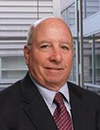 Professor Conlisk received his PhD from Purdue University in Mechanical Engineering in 1978 and joined the Faculty of The Ohio State University in 1980 after a two-year adjunct professorship at Lehigh University. He is an internationally recognized expert in the areas in the areas of micro and nanofluidics, helicopter aerodynamics, and complex flows driven by vortices. Currently, his main research interests are developing models for ionic and biomolecular transport through nanotubes and channels for design of devices used for rapid molecular analysis, sensing, drug delivery and other applications. His book The Essentials of Micro and Nanofluidics with Application to the Biological and Chemical Sciences was published by Cambridge University Press in 2013. |
Michael ShulerSamuel B. Eckert Professor of Engineering, Cornell University, President Hesperos, Inc.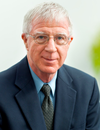 Michael L. Shuler is the Eckert Professor of Engineering, Emeritus in the Meing Department of Biomedical Engineering and in the Smith School of Chemical and Biomolecular Engineering at Cornell University, and was director of Cornell’s Nanobiotechnology Center. Shuler has degrees in chemical engineering (BS, Notre Dame, 1969 and Ph.D., Minnesota, 1973) and has been a faculty member at Cornell University since 1974. Shuler’s research includes development of “Body-on-a-Chip” for testing pharmaceuticals for toxicity and efficacy, creation of production systems for useful compounds, such as paclitaxel from plant cell cultures, and construction of whole cell models relating genome to physiology. Shuler is CEO and President of Hesperos, a company founded to implement the “Body-on-a-Chip” system. Shuler and F. Kangi have authored a popular textbook, “Bioprocess Engineering; Basic Concepts” now in its third edition. He has an honorary doctorate from the University of Notre Dame. Shuler has been elected to the National Academy of Engineering and the American Academy of Arts and Science and is a fellow of numerous professional societies. |
Steve SoperFoundation Distinguished Professor, Director, Center of BioModular Multi-Scale System for Precision Medicine, The University of Kansas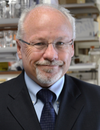 Prof. Soper is currently a Foundation Distinguished Professor in Chemistry and Mechanical Engineering at the University of Kansas, Lawrence. Prof. Soper also holds an appointment at Ulsan National Institute of Science and Technology in Ulsan, South Korea, where he is a World Class University Professor. He is also serving as a Science Advisor for a number of major worldwide companies. Prof. Soper is currently on the Editorial Board for Scientific Reports and Journal of Micro- and Nanosystems. |
Danilo TagleDirector, Office of Special Initiatives, National Center for Advancing Translational Sciences at the NIH (NCATS)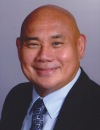 Dan Tagle is Director of the Office of Special Initiatives at NCATS where he many coordinates efforts towards development of disruptive technologies in translational research. He obtained his Ph.D. in Molecular Biology and Genetics from Wayne State University School of Medicine. He was an NIH National Research Service Award postdoctoral fellow in Human Genetics at the University of Michigan. He has served on numerous committees, advisory boards, and editorial boards. He has authored many scientific publications and has garnered numerous awards, including more recently the Roscoe O. Brady Award for Innovation and Accomplishment, and the Henry J. Heimlich Award for Innovative Medicine. |
Aaron WheelerCanada Research Chair of Bioanalytical Chemistry, University of Toronto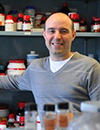 Aaron Wheeler completed his Ph.D. in Chemistry in 2003, working with Dick Zare at Stanford University. After graduating, Aaron spent two years as an NIH postdoctoral fellow at UCLA. Click here for links to Aaron's pre-Toronto publications. Since 2005, Aaron has been the Canada Research Chair of Bioanalytical Chemistry at the University of Toronto. Aaron is fortunate to work with a phenomenal (and prolific) research group -- their success has led to international recognition including the Arthur F. Findeis Award from the American Chemical Society and the Joseph Black Award from the Royal Society of Chemistry. |


