

Nancy AllbrittonKenan Professor of Chemistry and Biomedical Engineering and Chair of the Joint Department of Biomedical Engineering, University of North Carolina and North Carolina State University Nancy L. Allbritton is the Kenan Professor of Chemistry and Biomedical Engineering and Chair of the Joint Department of Biomedical Engineering at the University of North Carolina at Chapel Hill (UNC) and North Carolina State University (NC State). Her research focuses on the development of novel technologies for applications in single-cell analysis, micro-arrays and fluidics, and organ-on-chip and has resulted in over 180 full-length journal publications and patents and led to 15 commercial products. Her research program has been well funded by the National Institutes of Health with $60 million in grant funding since 1994. Four companies have been formed based on her research discoveries: Protein Simple (acquired by Bio-Techne in 2014 for $308M), Intellego (subsequently integrated into International Rectifier), Cell Microsystems (www.cellmicrosystems.com), and Altis Biosystems (www.altisbiosystems.com). Dr. Allbritton is a Fellow of the American Association for the Advancement of Science, the American Institute for Medical & Biological Engineering, and the National Academy of Inventors. She obtained her B.S. in physics from Louisiana State University, M.D. from Johns Hopkins University, and Ph.D. in Medical Physics/Medical Engineering from the Massachusetts Institute of Technology, with a postdoctoral fellowship at Stanford University. |
Martyn BoutelleProfessor of Biomedical Sensors Engineering, Imperial College London Martyn Boutelle is Professor of Biomedical Sensors Engineering in the Department of Bioengineering, Imperial College London, and Associate Provost for Estates Planning for Imperial College. |
Peter ErtlProfessor of Lab-on-a-Chip Systems, Vienna University of Technology Prof. Ertl holds an engineering degree in Biotechnology (University of Life Sciences, BOKU, Austria), a PhD in Chemistry (University of Waterloo, UW, Canada) and received his postdoctoral training as a biophysicist at University of California at Berkeley (UCB, US). Following a position as Director of Product Development at a UW spin-off venture (Canada), Dr. Ertl joint the Biosensor Technology unit at the Austrian Institute of Technology (AIT). During his tenure at the AIT, Dr. Ertl was also granted a Fulbright Visiting Scholarship at UC Berkeley (2012) and conducted visiting scientist positions at Nanyang Technological University, Singapore (2013), the Medical Center of the University of California at San Francisco (2014). In 2016 he was appointed Professor of Lab-on-a-Chip Systems for Bioscience Technologies at the Vienna University of Technology (TUW), where his research focuses on the development of advanced in vitro diagnostic microsystems and organ-on-a-chip systems. Additionally, Dr Ertl held a visiting research appointment at Imperial College London (UK) in 2019 , is speaker of the Austrian Microfluidics Initiative (AMI) and editor of the open access journal Organs-on-a-Chip (Elsevier). |
Steven C. GeorgeEdward Teller Distinguished Professor and Chair, Department of Biomedical Engineering, University of California-Davis Steven C. George, M.D., Ph.D. is a Professor of Biomedical Engineering at the University of California, Davis. He received his bachelors degree in chemical engineering in 1987 from Northwestern University, M.D. from the University of Missouri School of Medicine in 1991, and Ph.D. from the University of Washington in chemical engineering in 1995. He was on the faculty at the University of California, Irvine for 19 years (1995-2014) where he pursued a range of research interests including pulmonary gas exchange, lung mechanics, vascularizing engineered tissues, and microphysiological systems. The NIH FIRST award in 1998 and the CAREER and Presidential Early Career Award for Scientists and Engineers (PECASE) from the National Science Foundation in 1999 have previously recognized his work. While at UCI, he served as the William J. Link Professor and founding Chair of the Department of Biomedical Engineering (2002-2009), the Director of the Edwards Lifesciences Center for Advanced Cardiovascular Technology (2009-2014), and was the PI on a T32 predoctoral training grant from the National Heart Lung and Blood Institute. In 2014 he transitioned to become the Elvera and William Stuckenberg Professor and Chair of Biomedical Engineering at Washington University in St. Louis, and in 2017 moved to the UC Davis. He was elected a fellow in the American Institute of Medical and Biological Engineering (AIMBE) in 2007, a fellow of the Biomedical Engineering Society in 2017, has published more than 140 peer-reviewed manuscripts, and co-founded two early start-up companies. His work is currently funded by grants from the NIH that focus on creating tissue engineered models of the cardiac, pancreas, bone marrow, and cancer microenvironments using induced pluripotent stem cell and microfabrication technology. |
James HickmanProfessor, Nanoscience Technology, Chemistry, Biomolecular Science and Electrical Engineering, University of Central Florida; Chief Scientist, Hesperos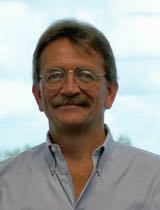 James J. Hickman is the Founding Director of the NanoScience Technology Center and a Professor of Nanoscience Technology, Chemistry, Biomolecular Science, Biomedical Engineering, Material Science and Electrical Engineering at the University of Central Florida. Previously, he held the position of the Hunter Endowed Chair in the Bioengineering Department at Clemson University. Dr. Hickman has a Ph.D. from the Massachusetts Institute of Technology in Chemistry. For the past thirty years, he has been studying the interaction of biological species with modified surfaces, first in industry and in the latter years in academia. While in industry he established one of the first bioelectronics labs in the country that focused on cell-based sensors and their integration with electronic devices and MEMS devices. He is interested in creating hybrid systems for biosensor and biological computation applications and the creation of functional in vitro systems for human body-on-a-chip applications. He has worked at NSF and DARPA in the area of biological computation. He is also the founder and current Chief Scientist of a biotechnology company, Hesperos, that is focusing on cell-based systems for drug discovery and toxicity. He has 166 publications and 20 book chapters, in addition to 34 issued patents out of 50 total patent applications. He was elected to the Board of Directors of the American Institute for Medical and Biological Engineering (AIMBE) for 2 consecutive terms, the premier society for Biomedical Engineering of which he is a Fellow. He is also a Fellow of the American Vacuum Society (AVS) and National Academy of Inventors (NAI) as well as BioFlorida’s Researcher of the Year (2022). Dr. Hickman along with Dr. Michael Shuler, won the Lush Prize, in the Science Category, which Supports Animal Free Testing in 2015. |
Thomas LaurellProfessor, Lund University Thomas Laurell is Professor in Medical and Chemical Microsensors at Lund University. Laurell has a background in engineering with a focus on biomedical technology, with a PhD from the technical faculty at Lund University. Laurell has 20 years experience in the development of lab-on-a-chip based bioanalytical and medical diagnostic technology. He was appointed distinguished professor at dept. Biomedical Engineering at Dongguk University, Seoul, Korea in 2009. |
Thomas LaurellProfessor, Lund UniversityThomas Laurell is Professor in Medical and Chemical Microsensors at Lund University. Laurell has a background in engineering with a focus on biomedical technology, with a PhD from the technical faculty at Lund University. Laurell has 20 years experience in the development of lab-on-a-chip based bioanalytical and medical diagnostic technology. He was appointed distinguished professor at dept. Biomedical Engineering at Dongguk University, Seoul, Korea in 2009. |
Peter LoskillAssistant Professor for Experimental Regenerative Medicine; Attract Group Leader Organ-on-a-Chip, Fraunhofer Institute for Interfacial Engineering and Biotechnology IGB, Eberhard Karls University Tübingen Dr. Peter Loskill is head of the Fraunhofer Attract group Organ-on-a-Chip in the Department of Cell and Tissue Engineering at the Fraunhofer Institute for Interfacial Engineering and Biotechnology IGB. Dr. Loskill graduated in 2012 from Saarland University with a PhD in Physics focusing on Biointerface science. He then spent 3 years in the laboratory of Prof. K. E. Healy at the University of California at Berkeley. There, he worked as a postdoctoral fellow and project leader, funded by the NIH NCATS TissueChip program and the German Science Foundation, and developed organ-on-a-chip systems based on human iPS-cell technology. In 2015, he was named as one of Technology Review’s “Innovators under 35 Germany”. He now leads an independent research group focusing on the integration of cardiac and adipose tissue into microfluidic environments and applications for drug screening and environmental toxicology testing. |
Holger SchmidtNarinder Kapany Professor of Electrical Engineering, University of California-Santa Cruz Holger Schmidt received the Ph.D. degree in electrical and computer engineering from the University of California Santa Barbara and served as a Postdoctoral Fellow at M.I.T. He is currently the Narinder Kapany Chair of Optoelectronics and Distinguished Professor of Electrical and Computer Engineering at UC Santa Cruz. He directs the W.M. Keck Center for Nanoscale Optofluidics and has served as the Associate Dean for Research in the Baskin School of Engineering. His research interests cover a broad range in photonics and integrated optics, including optofluidic devices, nanopore sensors, nano-magneto-optics, spintronic devices, and ultrafast optics. He has authored more than 400 publications, several book chapters, and co-edited the CRC Handbook of Optofluidics. He is a Fellow of the National Academy of Inventors, the IEEE and the Optical Society of America. He received an NSF Career Award, a Keck Futures Nanotechnology Award, and the Engineering Achievement Award by the IEEE Photonics Society. |
Steve SoperFoundation Distinguished Professor, Director, Center of BioModular Multi-Scale System for Precision Medicine, The University of Kansas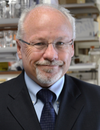 Prof. Soper is currently a Foundation Distinguished Professor in Chemistry and Mechanical Engineering at the University of Kansas, Lawrence. Prof. Soper also holds an appointment at Ulsan National Institute of Science and Technology in Ulsan, South Korea, where he is a World Class University Professor. He is also serving as a Science Advisor for a number of major worldwide companies. Prof. Soper is currently on the Editorial Board for Scientific Reports and Journal of Micro- and Nanosystems. |
Shoji TakeuchiProfessor, Center For International Research on Integrative Biomedical Systems (CIBiS), Institute of Industrial Science, The University of Tokyo Shoji Takeuchi received the B.E, M.E., and Dr. Eng. degrees in mechanical engineering from the University of Tokyo, Tokyo, Japan, in 1995, 1997, and 2000, respectively. He is currently a Professor in the Center for International Research on Integrative Biomedical Systems (CIBiS), Institute of Industrial Science (IIS), University of Tokyo. Since 2008, he is a director of Collaborative Research Center for Bio/Nano Hybrid Process at IIS. His current research interests include membrane protein chips, bottom-up tissue engineering and biohybrid MEMS. He received several awards including Young Scientists' Prize, the Commendation for Science and Technology by the Minister of Education, Culture, Sports, Science and Technology in 2008, the JSPS prize from the Japan Society for the Promotion of Science in 2010. |
George TruskeyR. Eugene and Susie E. Goodson Professor of Biomedical Engineering, Duke University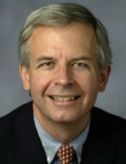 George Truskey is the R. Eugene and Susie E. Goodson Professor and Senior Associate Dean for Research in the Pratt School of Engineering. Dr. Truskey's research interests include cardiovascular tissue engineering, microphysiological systems, and the mechanisms of atherogenesis. He also studies cell adhesion and cell biomechanics, for which he focuses upon the effect of flow on endothelial cell adhesion to synthetic surfaces and monocyte adhesion to endothelium. He received a PhD degree in 1985 from MIT. He has been a faculty member in the Department of Biomedical Engineering at Duke since 1987. From 2003-2011, he was Chair of the Department of Biomedical Engineering at Duke University. He is the author of over 110 peer-reviewed research publications, a biomedical engineering textbook entitled Transport Phenomena in Biological Systems, six book chapters, over 180 research abstracts and presentations, 1 patent and 2 patent applications. He is a Fellow of the Biomedical Engineering Society (BMES), the American Institute of Medical and Biological Engineering, and the American Heart Association. He was president of BMES from 2008 to 2010. He received the Capers and Marion McDonald Award for Excellence in Mentoring and Advising from the Pratt School of Engineering at Duke (2007) and the BMES Distinguished Service Award (2012). |
Elisabeth VerpoorteChair of Analytical Chemistry and Pharmaceutical Analysis, University of Groningen E.M.J. (Sabeth) Verpoorte has more than 30 years of research experience in the microfluidics or lab-on-a-chip field. Her introduction to this technology came in 1990, after her PhD with D. Jed Harrison at the University of Alberta, when she started as a postdoctoral researcher to the pioneering µTAS group headed by Professor Andreas Manz at Ciba Ltd., Basel, Switzerland. In 2003, Sabeth made a strategic switch to assume a Chair in the Groningen Research Institute of Pharmacy, making a foray into a new research environment dominated by cells, tissue and drug development. Projects have involved the development of organ-on-a-chip systems to study drug metabolism (liver chip, gut chip), diagnose endothelial dysfunction and monitor liver tissue function. Efforts have also concentrated on continuous-flow particle separation strategies, paper microfluidics, as well as miniaturized analytical instrumentation (paper spray ionization, multidimensional chromatography). The acquisition of interdisciplinary projects involving scientists from the life sciences, chemistry, and physics disciplines continues to be a driving force in her research. |
Paul VultoManaging Director, MIMETAS Paul Vulto is CEO and co-founder of MIMETAS. Under his guidance, MIMETAS developed into a multinational company with operations in Europe, US and Japan. MIMETAS currently works with the majority of top-50 pharma companies and counts over 85 co-workers. Paul is the inventor behind the OrganoPlate® platform and PhaseGuide technology of MIMETAS. Prior to founding MIMETAS, Paul worked for the high-tech company Silicon Biosystems in Bologna, the Institute for Microsystems Engineering (IMTEK) at the University of Freiburg and the Leiden Academic Centre for Drug Research, Leiden University. Paul holds a cum Laude masters degree in Electrical Engineering and a cum Laude PhD degree in Microsystems Engineering. |


