

Martyn BoutelleProfessor of Biomedical Sensors Engineering, Imperial College London Martyn Boutelle is Professor of Biomedical Sensors Engineering in the Department of Bioengineering, Imperial College London, and Associate Provost for Estates Planning for Imperial College. |
Michael HellerProfessor, Dept Bioengineering, University of California-San Diego Michael J. Heller received his PhD in Biochemistry from Colorado State University in 1973. He was an NIH Postdoctoral Fellow at Northwestern University from 1973 to 1976. From 1976 to 1984 he was supervisor of the DNA Technology Group at Amoco Corporation (Standard Oil Indiana) During that time he carried out early bioengineering and recombinant DNA work on plants, algae and photosynthetic bacteria for energy and chemical production, and developed some of the first fluorescent resonant energy transfer (FRET) and chemiluminescent oligonucleotide probes for DNA hybridization analysis. He also oversaw Amoco’s sponsored energy and chemical research work at Cetus Corporation, which included the cloning of thermophilic enzymes. Dr. Heller was the Director of Molecular Biology at Molecular Biosystems, Inc., from 1984 to 1987. He was a co-founder of Integrated DNA Technologies, and served as President and Chief Operating Officer from 1987 to 1989. He was a co-found of Nanogen and served as the Chief Technical Officer from 1993 to 2001. Nanogen carried out the successful development and commercialization of electronic DNA microarray technology for clinical diagnostic genotyping applications. Dr. Heller is a Professor (Recall/Emeritus) in the Departments of Nanoengineering and Bioengineering at the University California San Diego. He is also now a Distinguished Scientist at the Oregon Health & Science University (OHSU), Center for Cancer Early Detection and Research (CEDAR), in Portland, Oregon. He has also co-founded a company called Biological Dynamics which is developing new sample to answer cancer diagnostics technology, based on the novel dielectrophoretic (DEP) technology developed at his UCSD lab. Dr. Heller has extensive industrial experience in biotechnology, biomedical and molecular diagnostic devices and nanotechnology, with particular expertise in the areas of DNA probe diagnostics, electrokinetic lab-on-a-chip devices, DNA synthesis, FRET/fluorescent-based detection technologies and electric field assisted self-assembly of DNA nanostructures. Dr. Heller has over 100 publications and 56 issued US patents. |
Danilo TagleDirector, Office of Special Initiatives, National Center for Advancing Translational Sciences at the NIH (NCATS)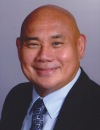 Dan Tagle is Director of the Office of Special Initiatives at NCATS where he many coordinates efforts towards development of disruptive technologies in translational research. He obtained his Ph.D. in Molecular Biology and Genetics from Wayne State University School of Medicine. He was an NIH National Research Service Award postdoctoral fellow in Human Genetics at the University of Michigan. He has served on numerous committees, advisory boards, and editorial boards. He has authored many scientific publications and has garnered numerous awards, including more recently the Roscoe O. Brady Award for Innovation and Accomplishment, and the Henry J. Heimlich Award for Innovative Medicine. |
Valérie TalyCNRS Research Director, Professor and Group leader Translational Research and Microfluidics, Université Paris Cité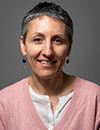 V. Taly is a CNRS research director and group leader of the Translational Research And Microfluidics team within the clinical oncology research unit MEPPOT (personalized medicine pharmacogenomics and therapeutic optimization) in the Cordeliers Research Center (university Paris Cité). Her team performs interdisciplinary researches aiming at developing and validating microfluidic tools for cancer research in close collaboration with clinicians and researchers in oncology and toxicology. Since 2008, she developed droplet-based digital procedures for Cancer diagnosis. Recently, her research has been dedicated to the clinical validation of droplet-based microfluidics for the non-invasive detection of Cancer biomarkers, the highlighting of new Cancer Biomarkers and the development of original tools and procedures for their detection with applications in personalized medicine, cancer recurrence detection and cancer diagnostics. She is co-founder of EMULSEO (2018) and METHYS DX (2021) start up companies. |


