

| Conferences > 3D-Printing in the Life Sciences, Biofabrication & Synthetic Biology > Keynote Speakers |
| Register | Login |
Elena BulanovaHead of Cell Technologies, 3D Bioprinting Solutions Russia Dr. Elena Bulanova received her Ph.D. in Cell Biology from Cancer Research Center in Moscow followed by postdoctoral training in Northwestern University in Chicago. In 1994 Dr. Bulanova joined Chemdiv Inc., where from 2009 until 2014 she was in charge of Assay Development and HTS Laboratory. Dr.Bulanova joined 3D Bioprinting Solutions in 2014 where she held the Laboratory of Cell Technologies. Dr. Bulanova is particularly interested in designing different technologies in 3D bioprinting using tissue spheroids. |
Albert FolchProfessor of Bioengineering, University of Washington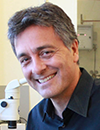 Albert Folch’s lab works at the interface between microfluidics and cancer. He received both his BSc (1989) and PhD (1994) in Physics from the University of Barcelona (UB), Spain, in 1989. During his Ph.D. he was a visiting scientist from 1990–91 at the Lawrence Berkeley Lab working on AFM/STM under Dr. Miquel Salmeron. From 1994–1996, he was a postdoc at MIT developing MEMS under Martin Schmidt (EECS) and Mark Wrighton (Chemistry). In 1997, he joined Mehmet Toner’s lab as a postdoc at Harvard-MGH to apply soft lithography to tissue engineering. He has been at Seattle’s UW BioE since June 2000, where he is now a full Professor, accumulating over 12,000 citations. In 22 years, he has supervised 19 postdocs (16% of whom have reached faculty rank), 36 graduate students (12 Ph.D. students, 25% of whom faculty rank, and 24 M.S. students), and ~43 undergraduates. In 2001 he received an NSF Career Award, and in 2014 he was elected to the AIMBE College of Fellows (Class of 2015). He served on the Advisory Board of Lab on a Chip 2010-2016 and serves on the Editorial Board of Micromachines since 2019. In 2022 he was elected a member of the Institute for Catalan Studies, one of the highest honors bestowed on Catalan scientists. He is the author of 5 books (sole author), including Introduction to BioMEMS (2012, Taylor&Francis), a textbook adopted by >103 departments in 18 countries, and Hidden in Plain Sight (MIT Press, 2022). Since 2007, the lab runs a celebrated outreach art program called BAIT (Bringing Art Into Technology), which has produced seven exhibits, a popular resource gallery of >2,000 free images related to microfluidics and microfabrication, and a YouTube channel that plays microfluidic videos with music which accumulate ~163,000 visits since 2009. |
Gabor ForgacsProfessor, University of Missouri-Columbia; Scientific Founder, Organovo; CSO, Modern Meadow Dr. Gabor Forgacs is a theoretical physicist turned bioengineer turned innovator and entrepreneur. He is the George H. Vineyard Professor of Biological Physics at the University of Missouri-Columbia, the Executive and Scientific Director of the Shipley Center for Innovation at Clarkson University and scientific founder of Organovo, Inc. and Modern Meadow, Inc. He was trained as a theoretical physicist at the Roland Eotvos University, Budapest, Hungary and the Landau Institute of Theoretical Physics, Moscow, USSR. He also has a degree in biology. His research interests span from topics in theoretical physics to physical mechanisms in early embryonic development. He is the co-author of the celebrated text in the field, “Biological Physics of the Developing Embryo” (Cambridge University Press, 2005) that discusses the fundamental morphogenetic mechanisms evident in early development. These mechanisms are being applied to building living structures of prescribed shape and functionality using bioprinting, a novel tissue engineering technology he pioneered. He is the author of over 160 peer-reviewed scientific articles and 5 books. He has been recognized by numerous awards and citations. In particular, he was named as one of the “100 most innovative people in business in 2010” by FastCompany. |
Paul GatenholmProfessor, Director of 3D Bioprinting Center, Chalmers University of Technology, Sweden; CEO, CELLHEAL AS, Norway Dr. Gatenholm is professor of Biopolymer Technology at Chalmers University of Technology, Founder of 3D Bioprinting Center, and Director of Graduate School at WWSC. He is also Adjunct Professor at Joint School of Biomedical Engineering and Sciences at Virginia Tech and Wake Forest University and Adjunct Professor of Biomaterials at Wake Forest Institute for Regenerative Medicine in Winston-Salem, North Carolina, USA. His research includes biological fabrication through the use of enzymes, cells, and the coordination of biological systems. Dr. Gatenholm is particularly interested in designing and preparing new biomaterials which can replace or regenerate tissue and organs. During past five years he has dedicated his time to development of 3D Bioprinting technology which he believes will revolutionize the field of Medicine. He has published more than 300 papers and edited several books and has more than 9000 citations. He is elected member of Swedish Royal Academy of Engineering Sciences. Dr Gatenholm is an entrepreneur and is currently CEO of new biotech start up in Oslo, Norway. |
John HornickPartner, Finnegan, Henderson, Farabow, Garrett & Dunner, L.L.P. John has been a counselor and litigator in the Washington, D.C. office of the Finnegan IP law firm (one of the large IP firms in the world) for over 30 years, where he has litigated close to 100 IP cases. John authored the popular recent book, 3D Printing Will Rock the World, and founded Finnegan’s 3D Printing Working Group and advises clients about how 3D printing may affect their businesses. John frequently speaks and writes on 3D printing and has been recognized as a thought leader in this space. His articles have been published at www.3DPrintingIndustry.com, in the Journal of 3D Printing & Additive Manufacturing, where he serves on the Editorial Board, and in Wired Innovation, and he writes a column for 3D Printing World. He was the only IP attorney selected by the U.S. Comptroller General Forum on Additive Manufacturing (which is the basis of a report to Congress). John is a juror for the International Additive Manufacturing Award. |
David L. KaplanStern Family Endowed Professor of Engineering, Professor & Chair -- Dept of Biomedical Engineering, Tufts University David Kaplan holds an Endowed Chair, the Stern Family Professor of Engineering, at Tufts University. He is Professor & Chair of the Department of Biomedical Engineering and also holds faculty appointments in the School of Medicine, the School of Dental Medicine, Department of Chemistry and the Department of Chemical and Biological Engineering. His research focus is on biopolymer engineering to understand structure-function relationships, with emphasis on studies related to self-assembly, biomaterials engineering and functional tissue engineering/regenerative medicine. He has published over 600 peer reviewed papers and edited eight books. He directs the NIH P41 Tissue Engineering Resource Center (TERC) that involves Tufts University and Columbia University. He serves of the editorial boards of numerous journals and is Associate Editor for the ACS journal Biomacromolecules. He has received a number of awards for teaching, was Elected Fellow American Institute of Medical and Biological Engineering and received the Columbus Discovery Medal and Society for Biomaterials Clemson Award for contributions to the literature. |
Keith MurphyCEO, Organovo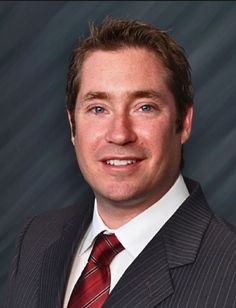 Mr. Murphy has more than 20 years of experience in biotechnology, including serving in Product Strategy and Director of Process Development roles at Amgen. He is a co-founder of Organovo and has been responsible for all company operations since 2007. His ten years at Amgen included four years as Global Operations Leader for the largest development program in Amgen’s history, Phase 3 osteoporosis/bone cancer drug denosumab. At Amgen, he also worked to develop several other novel formulation and device products. Prior to Amgen, he played a central role at Alkermes, Inc. on the development team for their first approved product, Nutropin (hGH) Depot. He holds a B.S. in chemical engineering from the Massachusetts Institute of Technology and is an alumnus of the UCLA Anderson School of Management. |
Ibrahim OzbolatHartz Family Associate Professor of Engineering Science and Mechanics, The Huck Institutes of the Life Sciences, Penn State University Ibrahim Tarik Ozbolat is a Hartz Family Associate Professor of Engineering Science and Mechanics, Biomedical Engineering and Neurosurgery, and a member of the Huck Institutes of the Life Sciences at Penn State University. Dr. Ozbolat’s main area of research is in the field of 3D Bioprinting. He has been working on several aspects of bioprinting such as bioprinting processes, bioink materials, bioprinters and post-bioprinting tissue maturation for manufacturing of more than a dozen tissues and organs. Dr. Ozbolat is a leading scientist with over 120 publications, including a sole-authored book in his domain. Due to his notable contributions to the field of bioprinting, he has received several prestigious international and national awards including 2014 NSF CAREER Award, 2014 SME Outstanding Young Manufacturing Engineer Award, 2014 ASME Chao and Trigger Young Manufacturing Engineer Award, 2014 ASME Tau Pi Sigma Gold Medal, 2015 IIE Dr. Hamid K. Eldin Outstanding Early Career Industrial Engineer in Academia Award, 2015 International Outstanding Young Researcher in Freeform and Additive Manufacturing Award and 2017 Hartz Family Career Development Professorship at Penn State. |
Shoji TakeuchiProfessor, Center For International Research on Integrative Biomedical Systems (CIBiS), Institute of Industrial Science, The University of Tokyo Shoji Takeuchi received the B.E, M.E., and Dr. Eng. degrees in mechanical engineering from the University of Tokyo, Tokyo, Japan, in 1995, 1997, and 2000, respectively. He is currently a Professor in the Center for International Research on Integrative Biomedical Systems (CIBiS), Institute of Industrial Science (IIS), University of Tokyo. Since 2008, he is a director of Collaborative Research Center for Bio/Nano Hybrid Process at IIS. His current research interests include membrane protein chips, bottom-up tissue engineering and biohybrid MEMS. He received several awards including Young Scientists' Prize, the Commendation for Science and Technology by the Minister of Education, Culture, Sports, Science and Technology in 2008, the JSPS prize from the Japan Society for the Promotion of Science in 2010. |
Ron WeissDirector, MIT Synthetic Biology Center; Professor, Massachusetts Institute of Technology (MIT)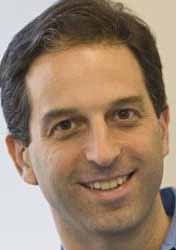 Ron Weiss is Professor in the Department of Biological Engineering and in the Department of Electrical Engineering and Computer Science at the Massachusetts Institute of Technology, and is the Director of the Synthetic Biology Center at MIT. He is also the Principal Investigator of the MIT Center for Integrative Synthetic Biology established and funded in September of 2013 as part of the NIH-NIGMS national centers for systems biology (cisb.mit.edu). He received his PhD from MIT in 2001 and held a faculty appointment at Princeton University between 2001 and 2009. His research focuses primarily on synthetic biology, where he programs cell behavior by constructing and modeling biochemical and cellular computing systems. A major thrust of his work is the synthesis of gene networks that are engineered to perform in vivo analog and digital logic computation. He is also interested in programming cell aggregates to perform coordinated tasks using cell-cell communication with chemical diffusion mechanisms such as quorum sensing. He has constructed and tested several novel in vivo biochemical logic circuits and intercellular communication systems. Weiss is engaged in both hands-on experimental work and in implementing software infrastructures for simulation and design work. For his work in synthetic biology, Weiss has received MIT's Technology Review Magazine's TR100 Award ("top 100 young innovators", 2003), was selected as a speaker for the National Academy of Engineering's Frontiers of Engineering Symposium (2003), and received the E. Lawrence Keyes, Jr. / Emerson Electric Company Faculty Advancement Award at Princeton University (2003). In addition, his research in Synthetic Biology was named by MIT's Technology Review Magazine as one of "10 emerging technologies that will change your world" (2004). He was chosen as a finalist for the World Technology Network’s Biotechnology Award (2004), and was selected as a speaker for the National Academy of Sciences Frontiers of Science Symposium (2005). Over the last few years, Weiss has had several major publications in journals such as Nature, Nature Biotechnology, Science and PNAS. |
Stuart WilliamsDirector, University of Louisville Dr. Stuart Williams received his Ph.D. in Cell Biology from the University of Delaware followed by postdoctoral training in Pathology at the Yale School of Medicine. |
Martin YarmushFounding Director of the Center for Engineering in Medicine, Massachusetts General Hospital and Harvard Medical School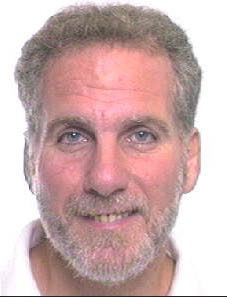 Dr. Martin L. Yarmush is the founding director of the Center for Engineering in Medicine. Formerly, the Helen Andrus Benedict Professor of Surgery and Bioengineering in the Harvard-MIT Division of Health Sciences and Technology, Dr. Yarmush currently holds a Senior Lectureship in Surgery and Bioengineering at Harvard Medical School and the Paul and Mary Monroe Professorship in Science and Engineering at Rutgers University. |


