

Wamadeva BalachandranDirector, Brunel University London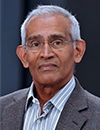 Professor Balachandran is a Research Professor and Director of Centre for Electronic Systems Research (CESR) at Brunel University, UK. He is a Fellow of IEEE (USA), IET (UK), InstP (UK), InstMC (UK) and Royal Society of Arts (UK). He served as Head of Department of Systems Engineering at Brunel University from 1999 to 2004. He was a Visiting Professor in the Driftmier Engineering Centre at University of Georgia in 1993 and 1996. He is a Visiting Professor at the University of Mansoura, Egypt and Dongguan University, China since 1993 and 1996 respectively. In 2004 he was a Visiting Scholar in the School of Engineering & Applied Science at University of California, Los Angeles. His research interest spans several different disciplines: Electrostatics & Charge Particle Dynamics, Electrohydrodynamics, Micro/Nano Technologies, Microengineered devices for POCT, Biosensors, Fingerprint Biometrics, Global Positioning Satellite System for Blind Navigation, Ultrasonic and EMAT NDT, Electron Beam and Microwave Plasma for Environmental Pollution Control and Medical Electronics. He has actively pursued research in these interdisciplinary fields for more than 30 years and published over 350 papers to date and filed 15 patent applications. He has presented more than 50 plenary and invited talks in his field of expertise at international conferences around the globe. He was a recipient of the IEEE John Melcher best paper award and Innovation and creativity awards in 2000 and 2004 respectively. In addition, he has also received best paper awards in eight international conferences. He continues to review manuscripts for 15 archival journals and research grant applications for EPSRC (UK), EU Framework, NSF (USA), NSERC (Canada), Greek Government, Lockheed Martin, Swiss Research Council and Portuguese Research Council. On a couple of occasions, Prof. Balachandran’s research has been featured on BBC World Service and TV Broadcasts. |
J Michael KoehlerHead of Department, Technische Universitat Ilmenau Dr J. Michael Koehler is the head of the Department of Physical Chemistry and Microreaction Technology at the Technical University of Ilmenau (Germany) since 2001. He studied Chemistry in Halle an der Saale and Jena, where he also habilitated in General and Physical Chemistry (1992). He led a research department at the Institute of High Technologies in Jena between 1991 and 2000. During this time, he also taught at the Universities of Wuppertal and Jena. Professor Koehler inter alias has edited books on microlithography, micro system technology and nanotechnology. His current research interests are focussed on nanotechnology and on application of droplet-based microfluidics in nanoparticle syntheses and bioscreenings. |
Kamlesh PatelR&D Advanced System Engineering and Deployment Manager, Sandia National Laboratories Dr. Kamlesh D. Patel is research scientist at Sandia National Laboratories-California and currently serves as the manager for the Advance Systems Engineering and Deployment Group. Dr. Patel’s research focus is part of a larger effort at Sandia to develop creative and innovative solutions to challenging and emerging issues in global chemical, biological, and radiological dangers?protecting our nation and troops abroad from such threats. An important element of Dr. Patel’s group is to improve our nation’s ability to anticipate and defend by developing advance concepts platforms for better detection and diagnostic capability to make rapid, real-time decisions. With a background in analytical separation science, coupled to years of experience in microsystems engineering, Dr. Patel has applied microfluidic-based technology and systems engineering to such new frontiers. |
Yves-Alain PeterProfessor, Ecole Polytechnique de Montréal Dr Yves-Alain Peter received the M.Sc. degree in physics and the Dr.Sc. degree from the University of Neuchaˆtel, Switzerland, in 1994 and 2001, respectively. In 1995, he joined the Department of Medical Radiobiology as a Research Associate at the Paul Scherrer Institute, Switzerland. From 1995 to 2001, he was a Graduate Research Assistant with the Applied Optics Group, Institute of Microtechnology, University of Neuchaˆtel. From 2001 to 2003, he was a Post-Doctoral Researcher with the Microphotonics Group, Stanford University. From 2003 to 2004, he was a Research and Development Engineer and a Project Leader with the Swiss Center for Electronics and Microtechnology, Switzerland. In 2004, he joined Polytechnique Montre´al, Canada, where he is now Professor of Engineering Physics. His current research interests include microphotonics and micro-opto-electro- mechanical systems. |
C Raman SuriHead, CSIR- IMTECH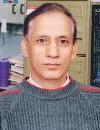 Biosensor and Nanobiotechnology group (BNG) at IMTECH, headed by Dr. C. Raman Suri has major objective to develop low cost molecular/immuno diagnostics devices for health care and environmental applications. Dr. Suri is Sr. Research Professor and head of the Nanobiotechnology & Biosensors Group at CSIR-Institute of Microbial Technology, Chandigarh (India) He was awarded the Ph.D. in Biotechnology from the Panjab University, Chandigarh and than worked as visiting faculty at several Universities in India and abroad. He is author of more than 100 refereed papers and international presentations including several patents in his name, and many national/international awards. His research is focused mainly on the generation of some specific biorecognition molecules (antibodies, aptamers and enzymes) against clinically and environmental important molecules, and integration these into micro- and nanostructures, with state-of-the-art bioelectronic read-out systems. Nanotechnology based biosensors are the product of this integration with great interest for several environment and clinical applications that aim at a significant improve of the quality and safety of citizen’s life. The biosensors developed by his group integrated with some ultra-sensitive nanostructures based platforms represent a novel generation devices in the cutting edge technologies in the area of new-generation biodiagnosis. His previous expertise gained developing electrochemical sensors and biosensors based on different materials is now joined to that of nanomaterials so as to develop novel, rapid-response biosensors selective for targeted chemical and biological molecules. Dr Suri coordinates the various research activities of the groups located both in the country and overseas who have interest in the development of immunoreagents for smaller molecules/biomarkers, low cost biosensing platforms, and targeted drug delivery systems. He is also members of various research funding agencies of India. |
L Q WangProfessor, The University of Hong Kong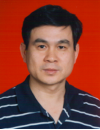 Prof. L. Q. Wang received his PhD from University of Alberta (Canada) and is a full professor in the Department of Mechanical Engineering, the University of Hong Kong. He is also the Qianren Scholar (Zhejiang) and serves as the director and the chief scientist for the Laboratory for Nanofluids and Thermal Engineering, Zhejiang Institute of Research and Innovation (HKU-ZIRI), the University of Hong Kong. He has many years of university experience in thermal & power engineering, energy & environment, transport phenomena, nanotechnology, biotechnology and applied mathematics in Canada, China/Hong Kong, Singapore and the USA. Prof. Wang has secured over 70 projects funded by diverse funding agencies and industries including the Research Grants Council of Hong Kong, the National Science Foundation of China and the Ministry of Science and Technology of China, and has published 10 books/monographs and over 330 book chapters and technical articles, many of which have been widely used by researchers all over the world. He is on the list of the top 1% most cited scholars. He has also led a team in developing a state-of-the-art thermal control system for the Alpha Magnetic Spectrometer (AMS) on the International Space Station. The AMS project is headed by Professor Samuel C. C. Ting (Nobel laureate in Physics, MIT, USA) and is to search for antimatter, dark matter and spectra of cosmic rays. |


