Conference Registration, Materials Pick-Up, Coffee, Tea and Networking
09:00
Conference Chair
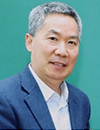
Welcome and Introduction by Conference Co-Chairperson Guangsheng Luo, Professor, Tsinghua University
09:10
Conference Chair
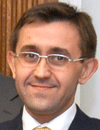
Welcome and Introduction by Conference Co-Chairperson Paul Watts, Distinguished Professor and Research Chair, Nelson Mandela University
09:20
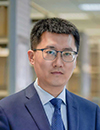
Details of the Conference, Area of Emphasis, Structure of the Sessions and Networking Opportunities Summary Kai Wang, Associate Professor, Department of Chemical Engineering, Tsinghua University
09:30
Keynote Presentation
Scaling Mechanochemistry via Continuous Bead Milling Technology C. Oliver Kappe, Professor and Scientific Director, Center for Continuous Flow Synthesis and Processing, University of Graz
Mechanochemistry offers significant potential to improve the efficiency, sustainability, and cost-effectiveness of pharmaceutical manufacturing. However, many mechanochemical approaches remain at relatively low technology readiness levels and lack the chemical intensity required for industrial implementation. In this lecture we examine a technology referred to as bead milling as promising method to scale mechanochemistry from lab to production scale. In addition to presenting several recent literature examples, a recent case study from our labs will be highlighted where an amidation reaction was scaled from gram scale using ball milling equipment to multikilogram scale employing commercially available bead mills of different sizes/volumes.
10:15
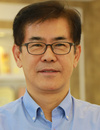
Presentation Details to be Confirmed Dong Pyo Kim, Changjiang Scholar, Intelligent Microfluidics for Advanced Theranostics Lab, Harbin Institute of Technology, China
10:45
Technology Spotlight: Independent and Controllable • Intelligent Innovation for the Future — Core Technologies and Application Practices of Flow Chemistry by OU SHISHENG Haiyu Wang, Application Director Flow Chemistry Asia 2026 focuses on core topics such as 3D printed reactors and microfluidics. As a leading domestic provider of flow chemistry solutions, Oushisheng has achieved full independent R&D of equipment, breaking external dependence. In this speech, Wang Haiyu, Application Director, will share the technical advantages of the company's core products. Combining typical application cases from Fuzhou University and East China University of Science and Technology, he will explain how flow chemistry solves the pain points of traditional processes. Based on the conference hot topics, he will also discuss the prospect of technology integration application and industrialization path, providing actionable references for the industry.
11:15
Mid-Morning Coffee and Tea Break -- Visit Exhibitors and View Posters
11:45
Keynote Presentation
Plant Extraction for Health Nutrition using Flow Chemistry in “Plants for Space (P4S)” Volker Hessel, Professor,, Adelaide University
Space exploration is not only about spacecraft, energy, and habitats. Humans must have all what they need for survival and, moreover, feel well in space during their voyages, when facing the extreme conditions. Space food through grown plants for space is most crucial for human space exploration.
The ARC Centre of Excellence Plants for Space (P4S) reprograms and fortifies plants to act as ‘biomanufactories’, producing medicines and health supplements. Those can be extracted from the plants by means of solvent extraction, using continuous-flow chemistry as frontier approach. This is assisted by plasma treatment of the biomass, to break cell walls in order to facilitate access to their internal value materials. Health nutrient examples, bio-resourced through solvent extraction, are quercetin, beta carotene, and p-phycocyanin. This solvent extraction is one step within a designed circular plant growth in space, for which the other steps will be presented as well. The health nutrients are formulated to liquid space medicines (nanoemulsions, nanoemulgel) by means of flow chemistry, and their stability under microgravity has been investigated (simulations, cosmic-ray exposure on Earth, sounding rocket flight, ISS experiment). A life cycle assessment (LCA) study has been conducted to decipher the environmental impact of plants grown for space (vertical/indoor farming) and the subsequent health nutrient solvent extraction. As an outlook, new kinds of space foods (cheese, snack, steak) will be presented.
12:30
Networking Buffet Lunch in the Hotel Restaurant
14:00
Conference Chair
Introduction to Afternoon Session: Emerging Topics in Flow Chemistry 2026 -- Chaired by Professor Volker Hessel, Professor, Adelaide University, Australia Volker Hessel, Professor,, Adelaide University