

Volker HesselProfessor, Adelaide University Professor Volker Hessel studied chemistry at Mainz University/D. 1994: Institut für Mikrotechnik Mainz/Germany (Director R&D); 2005: Professor Eindhoven University of Technology/NL; 2018: Deputy Dean (Research), Professor University of Adelaide, Australia; 2019: part-time professor University of Warwick/UK. |
C. Oliver KappeProfessor and Scientific Director, Center for Continuous Flow Synthesis and Processing, University of Graz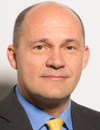 C. Oliver Kappe is Professor of Chemistry at the University of Graz (Austria) and Scientific Director of the Center for Continuous Flow Synthesis and Processing (CC FLOW) at the Research Center Pharmaceutical Engineering GmbH (RCPE). He received his diploma (1989) and his doctoral (1992) degrees in organic chemistry from the University of Graz where he worked with Gert Kollenz on cycloaddition and rearrangement reactions of acylketenes. After periods of postdoctoral research work on reactive intermediates and matrix isolation spectroscopy with Curt Wentrup at the University of Queensland in Brisbane, Australia (1993-1994) and on synthetic methodology/alkaloid synthesis with Albert Padwa at Emory University in Atlanta, USA (1994-1996), he moved back to the University of Graz in 1996 to start his independent academic career. He obtained his „Habilitation“ in 1998 in organic chemistry and was appointed Associate Professor in 2000. Since 2011 he is Professor for „Technology of Organic Synthesis“ (Organische Synthesetechnologie) at the Institute of Chemistry at the University of Graz. He has spent time as visiting scientist/professor at e.g. the Scripps Research Institute (La Jolla, USA, K. Barry Sharpless, 2003), the Toyko Institute of Technology (Toyko, Japan, T. Takahashi, 2008), the Sanford-Burnham Institute for Medical Research (Orlando, USA, 2010) and the Federal University of Rio de Janeiro (Rio de Janeiro, Brazil, 2013-2015). |
Dong Pyo KimChangjiang Scholar, Intelligent Microfluidics for Advanced Theranostics Lab, Harbin Institute of Technology, China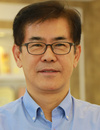 Prof. Kim is a Yangtze River chair professor of HIT-Shenzhen, leading to innovative microfluidics for advanced theranostics from 2025, by shifting from POSTECH in Korea. He obtained a Ph.D. in chemistry and a postdoctoral degree in materials engineering, and worked at a national lab and a university for over 30 years in total, since 1993. His career in microfluidic-based continuous-flow synthetic processes encompasses the manufacturing of APIs and bespoke drug delivery systems, as well as the recent development of AI-based autonomous and integrated processes for biopharmaceuticals. He has published 350 peer-reviewed papers and 50 patents. He received the Academic Excellence Award (2017, Korean Chemical Society), Severo Ochoa Visiting Fellowship (2017, Spain), the POSTECHIAN of the Year (2016, POSTECH), The Scientist of the Month (2016, NRF), Yonsan chaired professor (POSTECH,2017), Henry McGee Lecturer (Virginia State Univ, 2021). |
Christophe LenProfessor, Chimie ParisTech, CNRS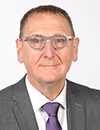 Prof. Dr. Christophe Len received his Ph.D. in 1995 from the Université de Picardie Jules Verne followed by a post-doctoral fellow at the University of Hull (UK). In 1997, he became assistant Professor at UPJV and was promoted to full Professor in 2004 at the Université de Poitiers (France). In 2010, he moved as full Professor to the Université de Technologie de Compiègne – UTC (France). Since 2017, he has developed his research at Chimie ParisTech (France). He has published ~ 250 original publications and review articles, 11 book chapters, and 12 patents (H 49, 7497 citations, Scopus). Among recent awards and recognition to his scientific career, he was promoted Honorary Professor of the University of Hull, England (2012–2018), Honorary Professor at the University of Delhi, India (2022), Honorary Professor at the Xi’an Jiaotong University, China (2022-2025) and Fellow of the Royal Society of Chemistry (FRSC, 2015). In 2017, he was honored with the 2017 Glycerine Innovation Award sponsored by the American Cleaning Institute and the National Biodiesel Board. His current research explores organic chemistry and continuous flow. |
Shengyang TaoDean, Dalian University of Technology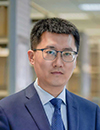 Shengyang Tao is a professor and doctoral supervisor at Dalian University of Technology. He studied chemistry at Tsinghua University from 2000 to 2008, receiving both his bachelor’s and doctoral degrees. Since 2008, he has worked at Dalian University of Technology, where he currently serves as Dean of the School of Chemistry. He was recognized as a Young Scholar in the Ministry of Education’s “Chang Jiang Scholars Program.” His research focuses on interdisciplinary fields including microfluidics, continuous-flow reactions, and digital and intelligent chemistry. Professor Tao has published over 120 papers in internationally renowned journals and authored or co-authored seven textbooks and monographs. He has led more than 20 research projects funded by the National Natural Science Foundation of China, national key research programs, and industrial collaborations. Additionally, he serves as a committee member of the Microchemical Technology and Intelligent Manufacturing divisions of the Chemical Industry and Engineering Society of China, is on the inaugural Editorial Board for Popular Science Education of Chemical Communications under the Chinese Chemical Society, directs the Dalian Key Laboratory of Intelligent Chemistry, serves as Vice President of the Liaoning Society of Petroleum and Petrochemical Engineering, and is Independent Director of Shenyang Chemical Co., Ltd. |


